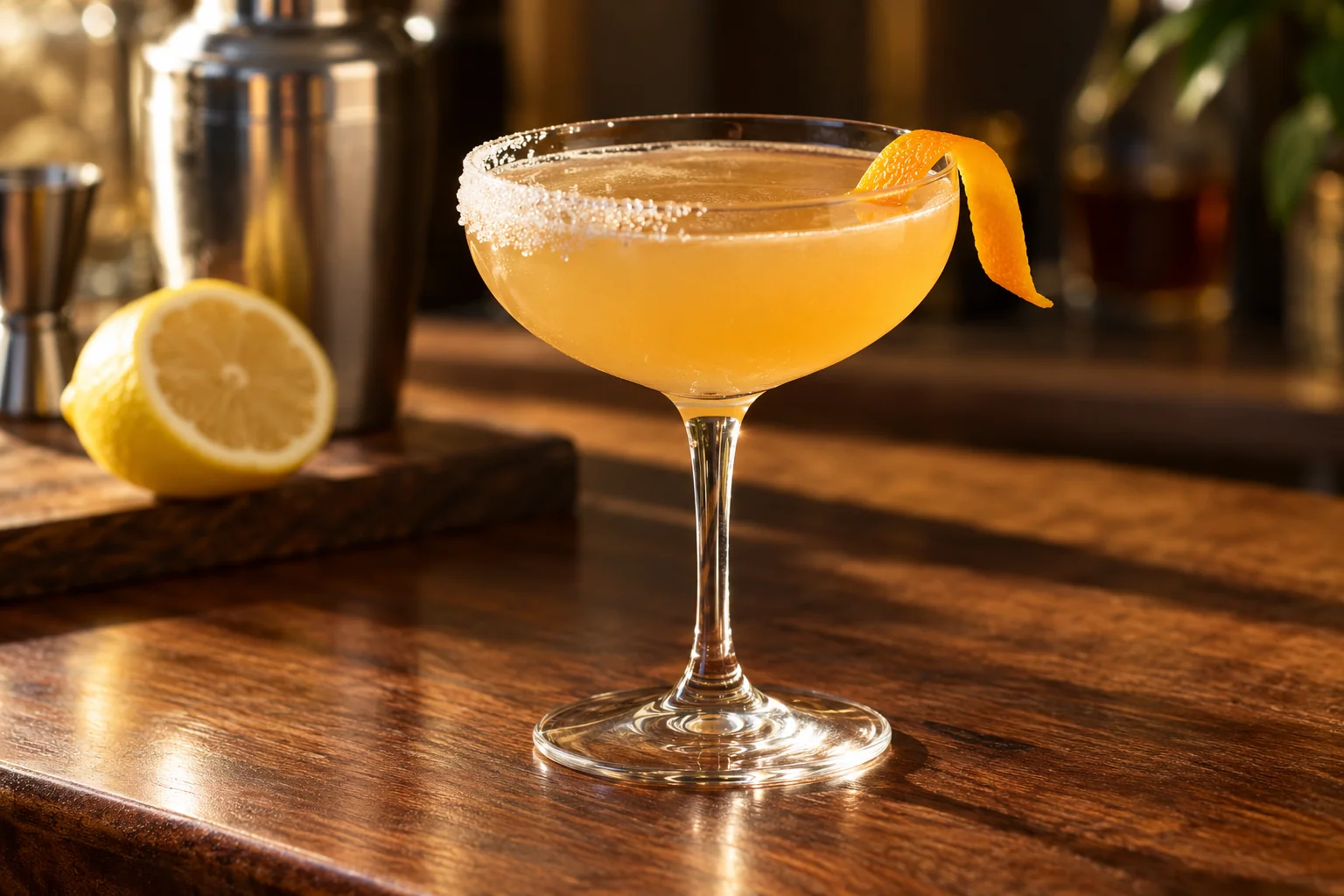
A Sidecar cocktail combines cognac, orange liqueur and fresh lemon juice, shaken with ice and served in a chilled stemmed glass. It has the bright acidity of a sour, with orange sweetness and the rounded fruit and oak notes of brandy underneath.
The recipe below uses 50 ml cognac, 20 ml Cointreau and 20 ml lemon juice. That makes the ratio easy to remember: 5:2:2. A sugar rim is optional; coating only half the rim lets you choose a sweeter or sharper sip without changing the drink itself.
Jump to the recipe, or read on for bottle choices, substitutions and ways to correct an overly tart Sidecar.
Classic Sidecar cocktail recipe
The liquid proportions follow the International Bartenders Association Sidecar, using Cointreau as the triple sec. The IBA specifies no garnish. The optional half sugar rim and orange twist below are serving choices, not part of that specification.
Makes: 1 cocktail. Prep and total time: 5 minutes. Equipment: cocktail shaker, measure, strainer and a small coupe or cocktail glass. A fine strainer is useful but optional.
Ingredients
- 50 ml cognac
- 20 ml Cointreau or another triple sec
- 20 ml freshly squeezed lemon juice
- Ice cubes, for shaking
- Optional: 1 lemon wedge and 1 teaspoon fine sugar, for a half rim
- Optional: 1 thin strip of orange peel, for garnish
Use milliliters for the stated recipe. If your measure only has ounce markings, a practical rounded version is 1⅔ oz cognac, ⅔ oz orange liqueur and ⅔ oz lemon juice. These are approximate bar conversions.
How to make it
1. Chill and prepare the glass
Chill a small coupe or cocktail glass. For an optional sugar rim, spread the sugar on a saucer, moisten half the outside rim with the lemon wedge, and roll that edge lightly in the sugar. Keep sugar out of the bowl of the glass.
2. Measure the three ingredients
Add the cognac, Cointreau and fresh lemon juice to a shaker, then fill it with solid ice cubes.
3. Shake until cold
Shake firmly for about 10–15 seconds, until the shaker feels very cold. The timing is a starting point; ice size and starting temperature affect chilling and dilution.
4. Strain and finish
Strain into the prepared glass without serving ice. For a smoother surface, pour through a fine strainer as well. If using the orange peel, gently squeeze its oils over the drink and rest it on the rim. Serve immediately.
Which cognac works in a Sidecar?
Choose a cognac whose flavor you enjoy and whose price makes sense for mixing. VS or VSOP are practical places to start. There is no need to buy a costly older bottle just to make the recipe.
A fruit-forward cognac keeps the drink lively; a more oak-led bottle can make the finish feel drier. The same measurements can therefore taste different with different bottles. Keep the lemon and orange liqueur constant when comparing cognacs so you can actually identify what changed.
Cognac is a type of brandy. Another grape brandy can make a pleasant variation, though its fruit, oak and sweetness impressions may differ. If you already have one, try the recipe before buying a new bottle solely for this drink.
Cointreau, triple sec or Grand Marnier?
Triple sec is the orange-liqueur category specified in the IBA recipe; Cointreau is a convenient named choice. It provides both orange flavor and sweetness, so it is not interchangeable with orange juice.
Other orange liqueurs vary in sweetness, strength and flavor. Begin with the measured 20 ml rather than assuming a sweeter bottle needs a larger pour. Grand Marnier can also be used as a variation, bringing a different, brandy-based orange character. Try it at the same measure first and adjust on a second attempt.
For another way to explore orange liqueur with citrus, our classic Margarita uses tequila and lime. The Sidecar gives that familiar sweet-and-sour structure a different base spirit and a lemon-led finish.
Does a Sidecar need a sugar rim?
No. Make it plain if you prefer a clean, tart sip. A half rim gives you both options in one glass: rotate the glass to drink from the coated or uncoated side.
Use a thin layer on the outside edge. A heavy crust can dominate the first sip and shed sugar into the cocktail. Prepare the rim before shaking so the cold drink does not sit in the shaker while you work.
Sugar rims are also a producer-supported serving option: Cointreau's Sidecar guide discusses the sweet-and-sour balance of a sugared rim, though its published liquid measures differ from the IBA formula used here. There is more than one established approach; choose one recipe and measure it consistently.
Why does my Sidecar taste too sour?
First check the measures. Lemon juice and orange liqueur are equal in this recipe, while cognac is the largest component. Pouring by eye can easily reverse that balance.
Then check temperature and dilution. A warm, under-shaken drink can taste concentrated and disjointed. Use plenty of solid ice and shake properly before deciding the recipe needs more sugar.
If it is still too sharp for your taste, try 5 ml simple syrup made with equal weights sugar and water, then shake briefly again. This is a sweeter adaptation, not the base recipe. On your next drink, either repeat that small syrup addition or try slightly less lemon; changing one thing at a time makes the result easier to reproduce.
If the drink tastes too sweet, omit the rim first. Then consider the orange liqueur you used before changing several measurements at once. Freshly squeezed lemon is preferable to a sweetened bottled lemon mixer, which adds another variable.
Frequently asked questions
Is a Sidecar shaken or stirred?
Shake it. Shaking mixes the lemon juice with the spirits while chilling and diluting the drink. Strain out the shaking ice rather than leaving it in the serving glass. Our double-straining guide explains the optional second strainer for removing small ice shards and pulp.
Can I use bourbon instead of cognac?
You can experiment, but that makes a whiskey-based variation. For a bourbon drink designed around lemon from the start, try the Paper Plane, which also brings amaro and Aperol into the mix.
Is a Sidecar served on the rocks?
This recipe is served up in a chilled stemmed glass, with no ice in the finished drink. If you choose a rocks glass with fresh ice, expect the flavor to soften as that ice melts.
Can I make two at once?
For two servings, measure 100 ml cognac, 40 ml Cointreau and 40 ml lemon juice. Shake together only if your shaker has enough room for plenty of ice and movement; otherwise shake two separate drinks. Prepare both glasses first and divide the strained cocktail evenly.
Can I prepare it ahead?
Measure the cognac and orange liqueur ahead for convenience. Squeeze and add the lemon close to serving, then shake with ice. A bottle of premixed ingredients still needs the water and chilling that shaking provides.