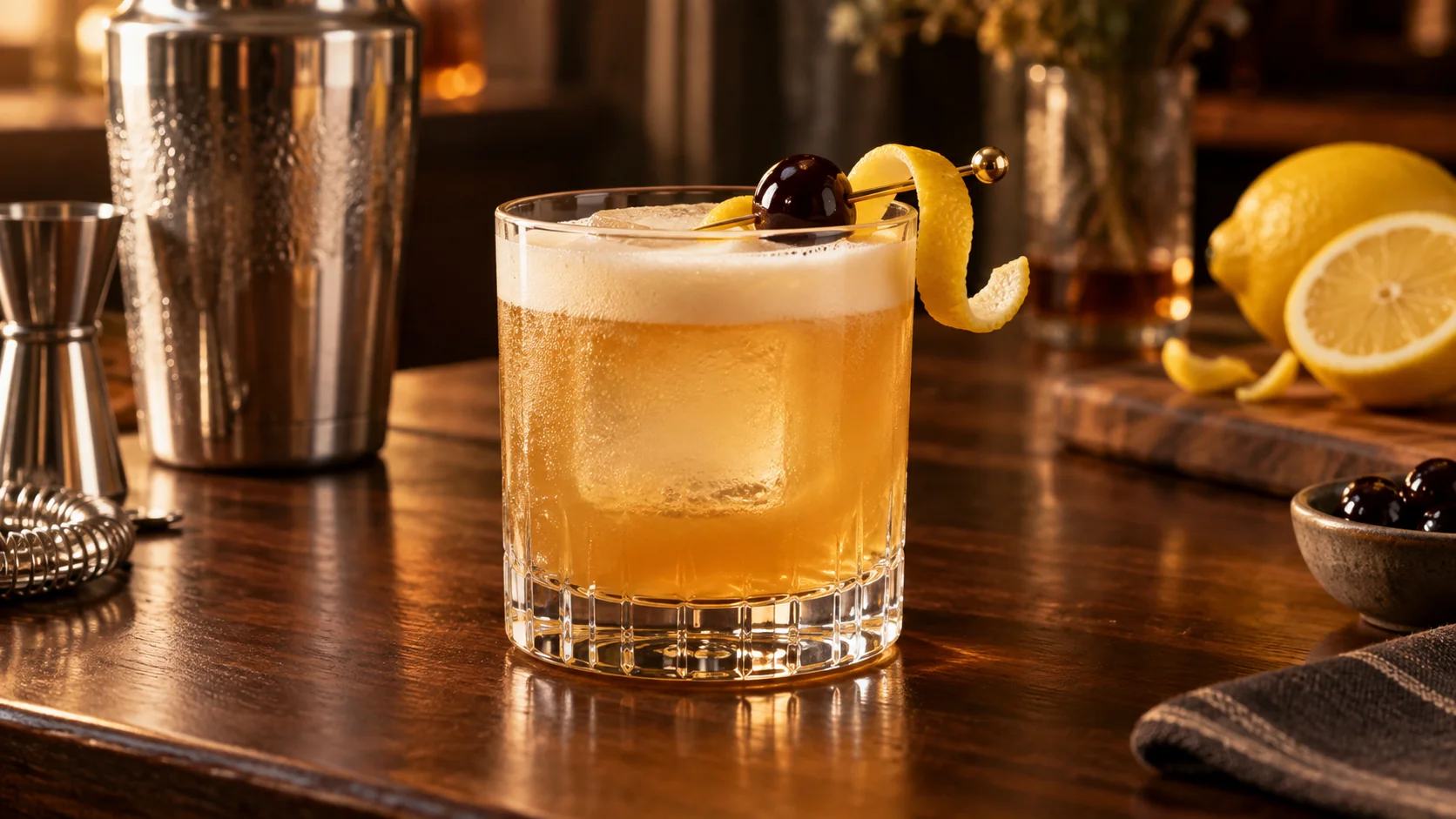
An Amaretto Sour should taste like almond and fresh lemon, with enough brightness to keep its sweetness in check. A little bourbon adds depth; a fine layer of foam makes the first sip soft. The result is a dessert-like cocktail that still has a clean, lively finish.
There are two useful versions to know: a modern bourbon Amaretto Sour and a simpler amaretto-and-lemon serve. Start with the bourbon recipe if you enjoy whiskey sours. Choose the second when you want the liqueur to lead.
Amaretto Sour Recipe with Bourbon
These proportions come from Jeffrey Morgenthaler's recipe, published in February 2012. His important change was adding cask-strength bourbon to give the sweet liqueur more structure. The measurements below follow his formula; the shaking times are practical starting points for a home shaker.
Makes: 1 cocktail. Preparation: about 5 minutes, with syrup ready. Glass: rocks glass.
Ingredients
- 1 1/2 oz (45 ml) amaretto
- 3/4 oz (22.5 ml) cask-strength bourbon
- 1 oz (30 ml) fresh lemon juice
- 1 teaspoon (5 ml) rich simple syrup, made with 2 parts sugar to 1 part water by weight
- 1/2 oz (15 ml) pasteurized egg white
- Ice for shaking and fresh ice for serving
- Lemon peel and a brandied cherry for garnish
Instructions
- Put the amaretto, bourbon, lemon juice, syrup, and egg white into a shaker.
- Close it securely and shake without ice for about 10 seconds to build foam.
- Add ice and shake again for about 15 seconds, until the shaker is very cold.
- Strain into a rocks glass over fresh ice. Use a fine strainer as well if you want to catch small ice fragments.
- Express the lemon peel over the surface and garnish with the peel and a brandied cherry.
The ounce and milliliter measures use the usual rounded bar conversion. Pick one set and use it consistently.
What a Balanced Amaretto Sour Tastes Like
Think almond pastry with a squeeze of lemon: sweet at first, bright through the middle, then a little oak and warmth. The bourbon should support the almond flavor without taking over. Foam gives the surface a soft texture, while the drink underneath stays fluid.
It is useful to compare this with a Paper Plane. Both put bourbon beside citrus and liqueur, but the Paper Plane heads toward bitter orange and herbs. The Amaretto Sour leans toward almond and a softer finish. If you already enjoy the New York Sour, this is another way to explore the sour family.
Why This Classic Deserves Another Look
The Amaretto Sour ranked 11th in Drinks International's 2026 bestselling classics list, up from 15th in 2025. That is a useful sign of its place on cocktail menus, rather than a measure of every drink ordered worldwide. The ranking comes from a poll of 100 bars selected for their record in international and regional awards.
The report places the drink's early popularity in the 1970s and describes its later shift toward fresh citrus, added bourbon, and optional egg white. Morgenthaler's published recipe gives home bartenders a particularly clear version of that modern approach.
Choosing the Amaretto and Bourbon
Start with an amaretto you like the smell of. Its almond character is central to the drink, so substituting a different liqueur will change the result substantially. Disaronno is one option; another amaretto can work, but taste before deciding whether to adjust the syrup.
Cask-strength bourbon is the reference recipe's choice. If you have a 100-proof bourbon instead, use the same measured amount as a starting point and expect a gentler whiskey contribution. That is a home adaptation, rather than the exact published specification. A rare bottle is unnecessary: choose something you are comfortable mixing.
For more on choosing whiskey by flavor and proof, see our bourbon cocktail guide.
Make the Small Amount of Syrup Count
This recipe calls for a teaspoon of syrup, so measure it. A casual pour can turn a bright drink into something much heavier.
To make a small batch of rich syrup, gently heat 100 g white sugar with 50 g water, stirring until dissolved. Cool it, transfer to a clean container, and refrigerate. This follows the weight-based approach in Morgenthaler's syrup guide. White sugar keeps the syrup's flavor simple; a darker sugar gives the cocktail another flavor to account for.
If the finished drink is too sweet for you, try the next serving without the teaspoon of syrup before changing the other ingredients. Keep a note of the amaretto and bourbon used so you can repeat the version you prefer.
A Simpler Amaretto Sour Without Bourbon
An Amaretto Sour does not have to contain whiskey. Disaronno's own Sour recipe uses amaretto and lemon, with syrup and foam optional. This is a useful alternative when you want fewer ingredients.
Ingredients
- 2 oz (60 ml) amaretto
- 1 oz (30 ml) fresh lemon juice
- 1 teaspoon (5 ml) simple syrup, optional
- Ice for shaking and serving
- Lemon slice for garnish
Instructions
- Shake the amaretto and lemon juice with ice until cold.
- Strain over fresh ice in a rocks glass and garnish with lemon.
- Taste before including the optional syrup in your next serving.
This version omits the brand recipe's optional foam. It has a more direct liqueur-and-citrus character. It still contains alcohol, even though there is no bourbon.
Egg White, Aquafaba, or No Foam?
Use pasteurized egg white for the bourbon recipe. The FDA recommends pasteurized eggs or egg products for preparations served with uncooked egg. Keep it refrigerated and follow the package instructions.
For an egg-free home adaptation, try 1/2 oz (15 ml) aquafaba, the liquid from chickpeas, in place of the egg white. Choose an unseasoned version and use the same dry shake followed by a shake with ice. Foam varies with the liquid's concentration, so treat that amount as a starting point. Check the liqueur's ingredients too if you need the whole cocktail to be vegan.
You can also leave out the foaming ingredient altogether. Shake the remaining ingredients with ice and strain over fresh ice; there is no need for a dry shake. The surface will be simpler and the texture less cushioned. Our egg white cocktail guide explains the shaking methods in more detail.
Common Problems and Small Fixes
- Too sweet: check that you used 5 ml of syrup, rather than a larger pour. Try omitting it in the next drink.
- Too sharp: check the lemon measurement and that the shaker had enough ice. Add a small amount of syrup only after tasting.
- Too much whiskey heat: try a bourbon with a lower alcohol percentage in your next serving, keeping the other measures steady.
- Weak foam: check your foaming ingredient and give the shake without ice enough effort. For a simpler workflow, skip the foam.
- Watery after sitting: serve promptly over fresh ice. Avoid leaving a finished drink waiting in the shaker.
Change one thing at a time. The first recipe is a useful reference; your preferred bottle combination may need a small adjustment. Keep the almond flavor clear, measure the lemon, and let the garnish add aroma without covering the glass in fruit.