Introduction
The Singapore Sling is one of the rare cocktails whose name works as both a recipe search and a travel image. It points directly to Singapore, to the Long Bar at Raffles Hotel, and to a style of early twentieth-century drinking that blended gin, fruit, herbal liqueurs, and hotel theatre into one rosy long drink. For home bartenders, the challenge is that many Singapore Sling recipes are either too vague or too sweet. The drink can become a glass of pineapple juice with gin in the background if the balance is not handled carefully.
A better Singapore Sling cocktail recipe treats the drink as a tropical gin sling, not as a generic party punch. Gin should still lead. Cherry liqueur should give depth and color. Cointreau and Benedictine should add small flashes of orange and spice. Pineapple juice should create foam and perfume without overwhelming the glass. Lime juice keeps the whole recipe upright.
This guide keeps the Raffles Hotel history in view while giving you a version that works in a modern home bar. It also explains why the "original" Singapore Sling is difficult to pin down, how the famous pink drink became associated with public drinking etiquette, and how to tune the recipe so it tastes bright rather than syrupy.
History and Origin
The accepted origin story places the Singapore Sling at Raffles Hotel in 1915, where bartender Ngiam Tong Boon worked at the Long Bar. The hotel and Singapore's National Library both connect the drink to Ngiam and to the social customs of colonial Singapore. Men could openly order whisky, gin, or gin slings. Women, by convention, were often expected to drink tea or fruit juice in public. The pink color of the Singapore Sling made the cocktail look gentle and fruit-forward, while the glass still carried a real alcoholic structure.
That story is useful, but it should be handled with some care. Early slings were a broad family of drinks, usually spirit, citrus, sugar, and water or soda. Singapore also had older references to gin slings and pink slings before the modern Raffles version became famous. The recipe most drinkers recognize today, with pineapple juice, lime, cherry liqueur, Cointreau, Benedictine, grenadine, and bitters, is strongly associated with Raffles, but cocktail historians still debate how closely it matches Ngiam's exact early formula.
That uncertainty does not make the drink less interesting. It makes it richer. The Singapore Sling sits at the meeting point between a nineteenth-century sling, a hotel signature cocktail, a tropical long drink, and a piece of Singapore hospitality branding. A well-made version should carry all of those ideas without losing drinkability.
Singapore Sling Cocktail Recipe
This recipe is Raffles-inspired but adjusted for a drier, more balanced home-bar result. It keeps the recognizable pineapple, cherry, orange, and herbal notes while giving gin enough space to lead.
Ingredients:
- 1 1/2 oz gin
- 1/2 oz cherry liqueur, preferably Cherry Heering
- 2 oz fresh pineapple juice
- 3/4 oz fresh lime juice
- 1/4 oz Cointreau
- 1/4 oz Benedictine
- 1/4 oz grenadine
- 1 dash Angostura bitters
- Pineapple wedge and cocktail cherry for garnish
Instructions:
- Add the gin, cherry liqueur, pineapple juice, lime juice, Cointreau, Benedictine, grenadine, and bitters to a shaker.
- Fill with firm ice and shake hard for 10 to 12 seconds. Pineapple juice needs a strong shake to create a light foam.
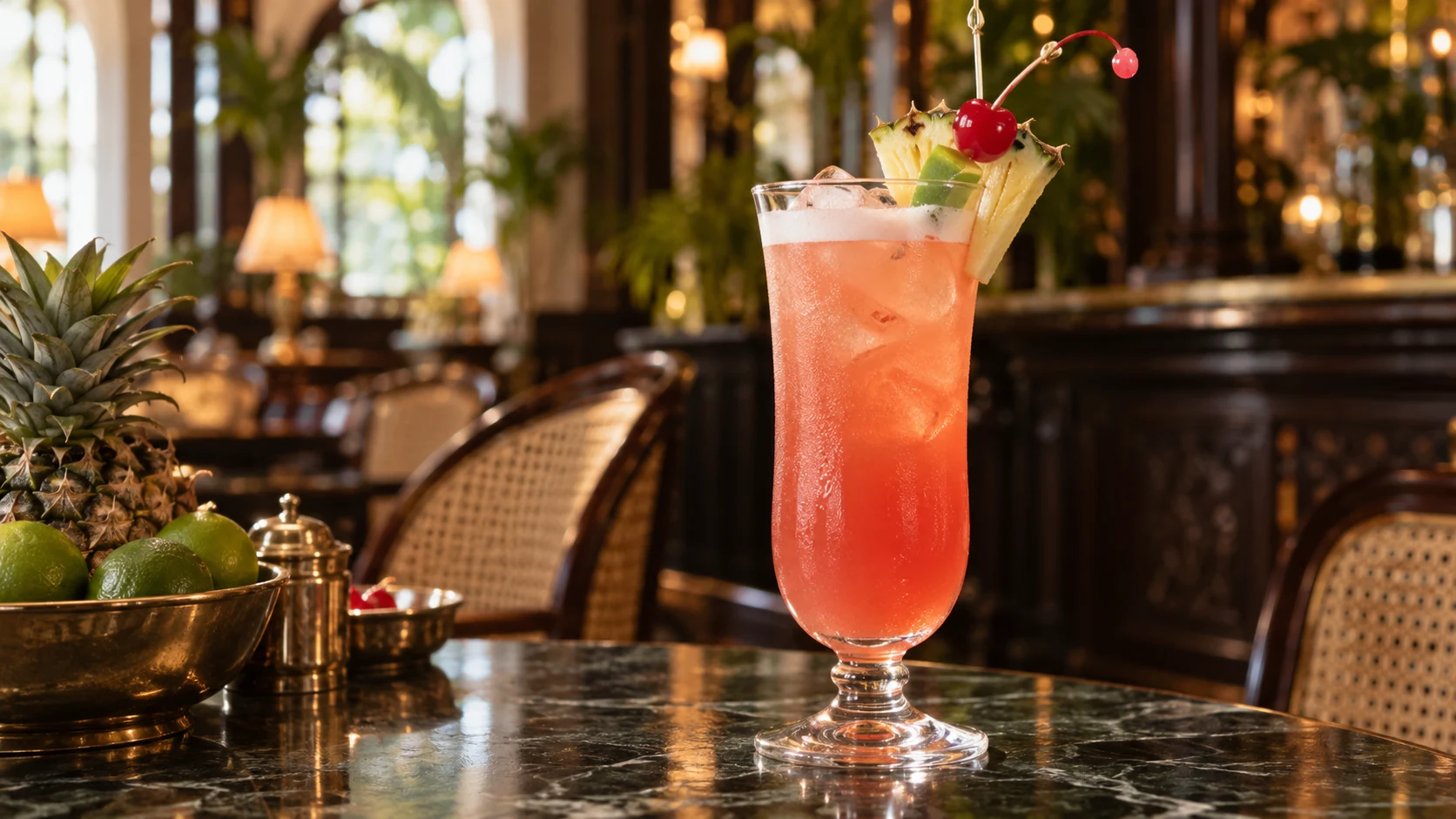
- Strain into a chilled highball, hurricane glass, or sling glass filled with fresh ice.
- Garnish with a pineapple wedge and a cocktail cherry.
Ratio and Balance
The most common Singapore Sling mistake is too much pineapple juice and too little acidity. Pineapple brings sweetness, texture, and aroma, but it can quickly flatten the drink. Lime juice is what turns the recipe from fruit juice into a cocktail. If the drink tastes dull, add another small squeeze of lime before adding more bitters or more gin.
Grenadine should be restrained. Its job is color and a small berry-pomegranate sweetness, not the main flavor. Cherry liqueur already brings sweetness and fruit, so the grenadine only needs to support it. If you use a very sweet commercial grenadine, reduce it to a barspoon. If you use a tart homemade grenadine, the full 1/4 oz works well.
Benedictine and Cointreau are both accents. Too much Benedictine can make the finish heavy and medicinal. Too much Cointreau can make the drink taste like orange candy. In small amounts, they do exactly what the Singapore Sling needs: they make the fruit taste more layered and give the gin a bridge into the tropical ingredients.
Choosing the Gin
A classic London dry gin is the safest choice. Juniper, citrus peel, coriander, and dry spice help the cocktail stay crisp. Avoid extremely soft or sweet gins, especially if they are built around floral notes rather than juniper. The Singapore Sling already has plenty of fruit, so the base spirit should bring structure.
Navy-strength gin can be excellent if you want a bolder drink. Use 1 1/4 oz navy-strength gin instead of 1 1/2 oz standard gin and keep the rest of the recipe unchanged. The higher proof gives the cocktail a cleaner spine and prevents the pineapple from taking over. For a lighter afternoon version, use 1 oz gin and add 1 to 2 oz chilled soda water after shaking.
Taste Notes
A balanced Singapore Sling should open with pineapple aroma and a rosy cherry color, then move quickly into lime, gin botanicals, and subtle spice. The texture should be long and cold, with a gentle foam from the pineapple juice. It should not taste like a smoothie, a tiki drink with too many syrups, or a simple gin-and-juice.
Cherry Heering gives the best deep fruit note because it tastes darker and more wine-like than many bright red cherry liqueurs. Benedictine adds honeyed herbs in the background. Angostura bitters bring clove and bitterness, which help dry the finish. The final impression should be tropical, but still elegant enough to feel connected to an old hotel bar.
Serving Tips
Use very cold glassware and fresh ice. A Singapore Sling is a long drink, so it will dilute as it sits. That dilution is part of the design, but starting with weak ice makes the cocktail watery before the first sip. If you want a taller drink, top with a small splash of soda water after shaking rather than increasing the pineapple juice.
The garnish can be simple. A pineapple wedge and cherry are enough. Mint looks attractive, but it pushes the drink toward a tiki presentation and can cover the gin and Benedictine aroma. Serve the drink with a straw so the guest can stir lightly as the foam, ice, and fruit settle.
Conclusion
The Singapore Sling cocktail recipe deserves more care than its bright color sometimes suggests. Behind the pink glass is a real historical drink tied to Raffles Hotel, Singapore's early hotel culture, and the evolution of the sling into a tropical classic. Keep the gin present, keep the lime sharp, and use the liqueurs as accents. The result is still festive, but it has the balance and historical character that made the Singapore Sling last for more than a century.