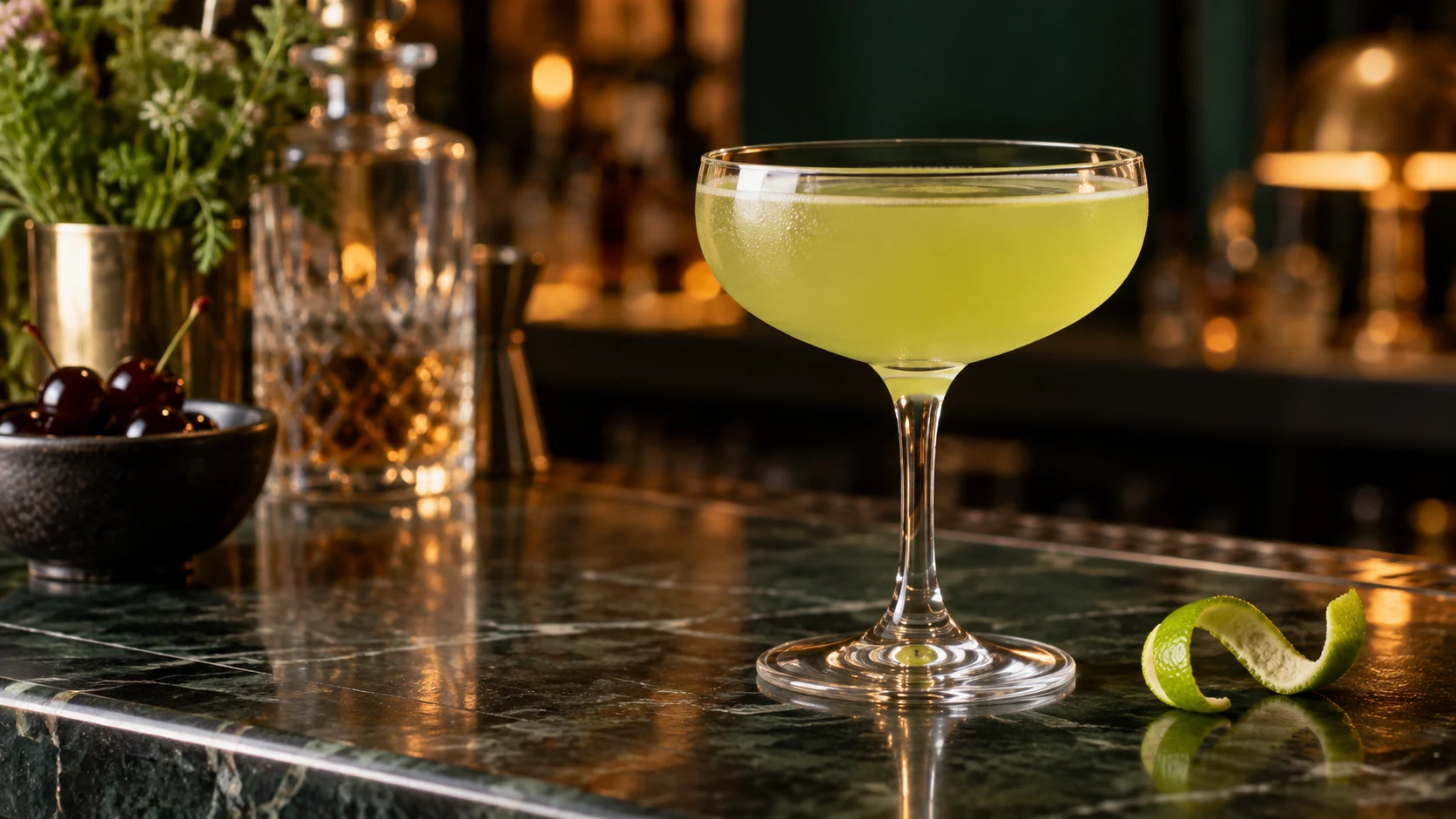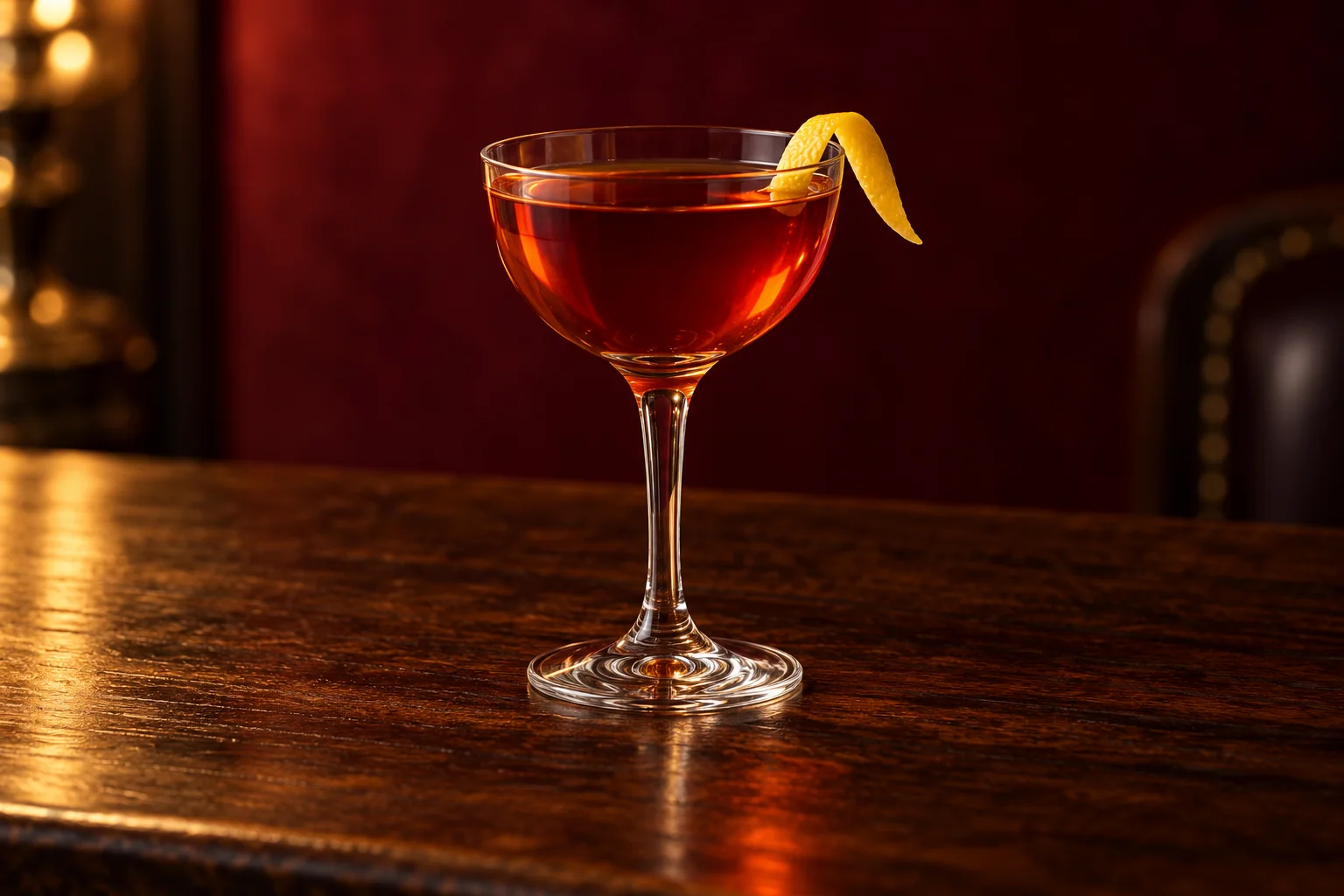
An Opera cocktail is a stirred gin drink with Dubonnet Rouge, maraschino liqueur and orange bitters, finished with a lemon twist. For this Opera cocktail recipe, use 2 oz gin, 1/2 oz Dubonnet and 1/4 oz maraschino, plus one dash of bitters. It is a short, spirit-forward drink with a wine-based accent and a small measure of cherry liqueur.
Opera cocktail recipe
The proportions follow Robert Hess’s written Opera recipe on DrinkBoy. This modern version uses less maraschino than the 1930 Savoy recipe discussed below.
Makes: 1 cocktail. Prep time: 5 minutes. Total time: 5 minutes. Equipment: jigger, mixing glass, bar spoon, strainer and small coupe or cocktail glass.
Ingredients
- 2 oz (60 ml) gin
- 1/2 oz (15 ml) Dubonnet Rouge
- 1/4 oz (7.5 ml) maraschino liqueur
- 1 dash orange bitters
- Ice for stirring
- 1 lemon twist, for garnish
The milliliter amounts are practical rounded equivalents of US fluid ounces. Use one measuring system throughout; the three main ingredients follow an 8:2:1 ratio.
Instructions
1. Chill the cocktail glass
Chill a small coupe or cocktail glass with ice water. Empty it before straining the drink.
2. Measure the ingredients
Pour the gin, Dubonnet Rouge, maraschino liqueur and orange bitters into a mixing glass.
3. Stir with ice
Fill the mixing glass with ice and stir for about 20–30 seconds, until thoroughly cold.
4. Strain and garnish
Strain into the chilled glass without ice. Twist a strip of lemon peel over the surface to release its oils, then add it as the garnish.
Choosing the three main ingredients
Gin: keep the base recognizable
London dry gin is a straightforward starting point. The recipe gives it the largest share of the glass, so choose a bottle whose botanical character you enjoy. A strongly flavored contemporary gin can make a different impression even with identical measurements. You do not need a rare bottle; accurate pouring matters more than making the ingredient list expensive.
Dubonnet Rouge: use the red aperitif
Use Dubonnet Rouge, the red wine-based aperitif. Here it supplies the wine component and sweetness alongside the gin. Check the label before pouring: a bottle of dry vermouth intended for Martinis is a different ingredient.
Sweet red vermouth can be a useful experiment if that is what you have, but it changes the drink’s botanical balance and bitterness. It should be described as a substitution, not an identical Opera recipe. Start with the same small measure if experimenting, and keep the remaining ingredients unchanged so you can identify the difference.
Maraschino: liqueur, not cherry syrup
Maraschino liqueur is an alcoholic cherry liqueur, not the liquid from a jar of cocktail cherries. The syrup is not a measure-for-measure replacement: it changes sweetness, flavor and alcohol content together. Cherry brandy and other sweet cherry liqueurs are also different products.
Measure the quarter-ounce carefully. At just 7.5 ml, this is an accent rather than a second base spirit. A freehand splash can easily double it. If your jigger lacks that mark, use a marked measuring spoon or small graduated measure rather than estimating half a generous pour.
What should an Opera taste like?
Expect gin botanicals at the center, supported by wine sweetness and the distinctive cherry character of maraschino. Orange bitters and expressed lemon peel add citrus aroma without adding juice.
Compared with a dry Martini, the liqueur and red aperitif point toward a sweeter, rounder style. There is no lemon or lime juice to make it a sour. If you want gin and maraschino in a citrus-led drink, explore the Last Word instead.
Why stirring and a cold glass matter
Stirring chills the mixture and introduces water from the ice. That dilution is part of preparing the cocktail, not a mistake to avoid. The suggested 20–30 seconds is a starting point; ice size, temperature and the mixing vessel affect how quickly it becomes cold.
Prepare the garnish and glass first so the finished drink can be strained immediately. Use plenty of solid ice, and avoid leaving the mixture standing while you look for a strainer. Serve it up, without ice in the glass, and hold the stem to limit warming.
Express the lemon peel over the surface rather than simply dropping it in. The garnish contributes aromatic oils; squeezing lemon juice into the drink would introduce a separate acidic ingredient and change the recipe.
Opera history: mandarin in 1914, maraschino in 1930
Difford’s Guide documents two early Opera recipes. Jacques Straub’s Drinks from 1914 combined equal portions of gin and Dubonnet with crème de mandarine. Harry Craddock’s The Savoy Cocktail Book from 1930 used maraschino instead, with two-thirds gin and one-sixth each Dubonnet and maraschino.
That distinction matters: the Hess formula above uses less maraschino relative to Dubonnet than the Savoy proportions. It also specifies orange bitters and a lemon twist. Difford’s current recipe combines mandarin and maraschino; it is another interpretation, not the formula used here. These sources establish published versions, not a confirmed story about who invented the drink or why it was named Opera.
Frequently asked questions
Can I leave out the orange bitters?
You can mix the three main ingredients, but you will omit an element of the Hess specification. Keep the single dash for the recipe above. Orange liqueur is not a direct substitute for concentrated orange bitters.
Does the Opera need mandarin liqueur?
Not in this version. Mandarin belongs to the earlier published recipe and to some later adaptations. Adding it here creates a variation and adds another source of sweetness.
Is it shaken or stirred?
This recipe is stirred, following DrinkBoy. Historical instructions differ, so an older shaken recipe is not evidence that the modern method is a transcription error.
What else can I make with maraschino?
Alongside the Last Word, try a Brooklyn cocktail, which takes the liqueur into a rye-whiskey setting. These are useful next recipes when you want to explore the bottle beyond one gin drink.