Introduction
The Brooklyn Cocktail is the quieter, drier relative of the Manhattan. It is named for the New York borough, built on rye whiskey, vermouth, maraschino liqueur, and Amer Picon, and surrounded by more historical confusion than its clean recipe suggests. For drinkers searching for a Brooklyn cocktail recipe, the main question is usually practical: what do you do if you cannot find Amer Picon? The deeper question is historical: which Brooklyn are you actually making?
Early printed recipes changed the vermouth, the whiskey, and sometimes even the base structure. Some versions used rye and sweet vermouth. Later influential versions used dry French vermouth. The Savoy Cocktail Book used Canadian whisky. Modern craft bars often land on rye, dry vermouth, maraschino, and a bitter orange amaro. That version is lean, aromatic, and more bracing than a Manhattan.
This guide explains the Brooklyn's vintage bar-book history, gives a balanced modern recipe, and shows how to substitute for Amer Picon without losing the drink's orange-bitter identity.
History and Origin
The Brooklyn Cocktail appears in J. A. Grohusko's 1908 Jack's Manual, where the recipe combines rye whiskey, vermouth, Amer Picon bitters, and maraschino. Grohusko was working in New York bar culture at a time when borough-named drinks were natural companions to the Manhattan and Bronx. The Brooklyn never became as famous as those drinks, but it had enough presence to keep showing up in cocktail books.
Jacques Straub printed a similar Brooklyn in the 1910s with French vermouth, Amer Picon, maraschino, and rye. Harry Craddock's 1930 Savoy Cocktail Book later included a Brooklyn with Canadian Club whisky and French vermouth. Those printed variations matter because they explain why modern recipes disagree. Is the Brooklyn supposed to be sweet-vermouth rich like a Manhattan variation, or dry-vermouth lean like a sharper aperitif cocktail?
The modern standard usually follows the drier path. Rye whiskey gives spice, dry vermouth gives snap, maraschino adds almond-cherry depth, and Amer Picon adds bitter orange. It is elegant, but less forgiving than a Manhattan. Small measurement changes are obvious.
Brooklyn Cocktail Recipe
This is a practical modern Brooklyn cocktail recipe for home bartenders. It keeps the classic dry profile but uses enough rye to stop the vermouth from dominating.
Ingredients:
- 2 oz rye whiskey
- 3/4 oz dry vermouth
- 1/4 oz maraschino liqueur
- 1/4 oz Amer Picon or bitter orange amaro substitute
- Lemon twist or cocktail cherry for garnish
Instructions:
- Add the rye whiskey, dry vermouth, maraschino liqueur, and Amer Picon to a mixing glass.
- Fill with ice and stir until very cold.
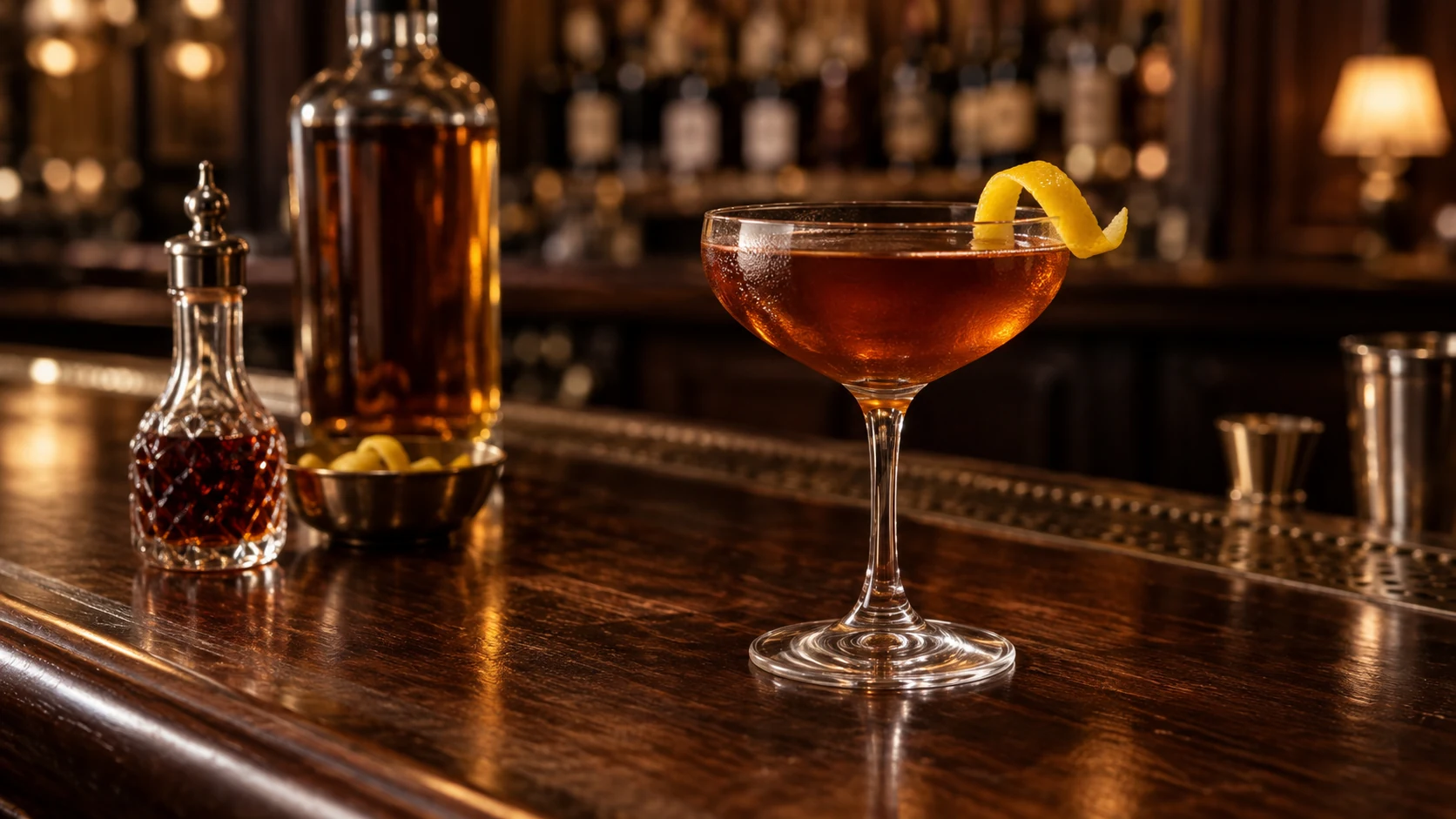
- Strain into a chilled coupe or Nick and Nora glass.
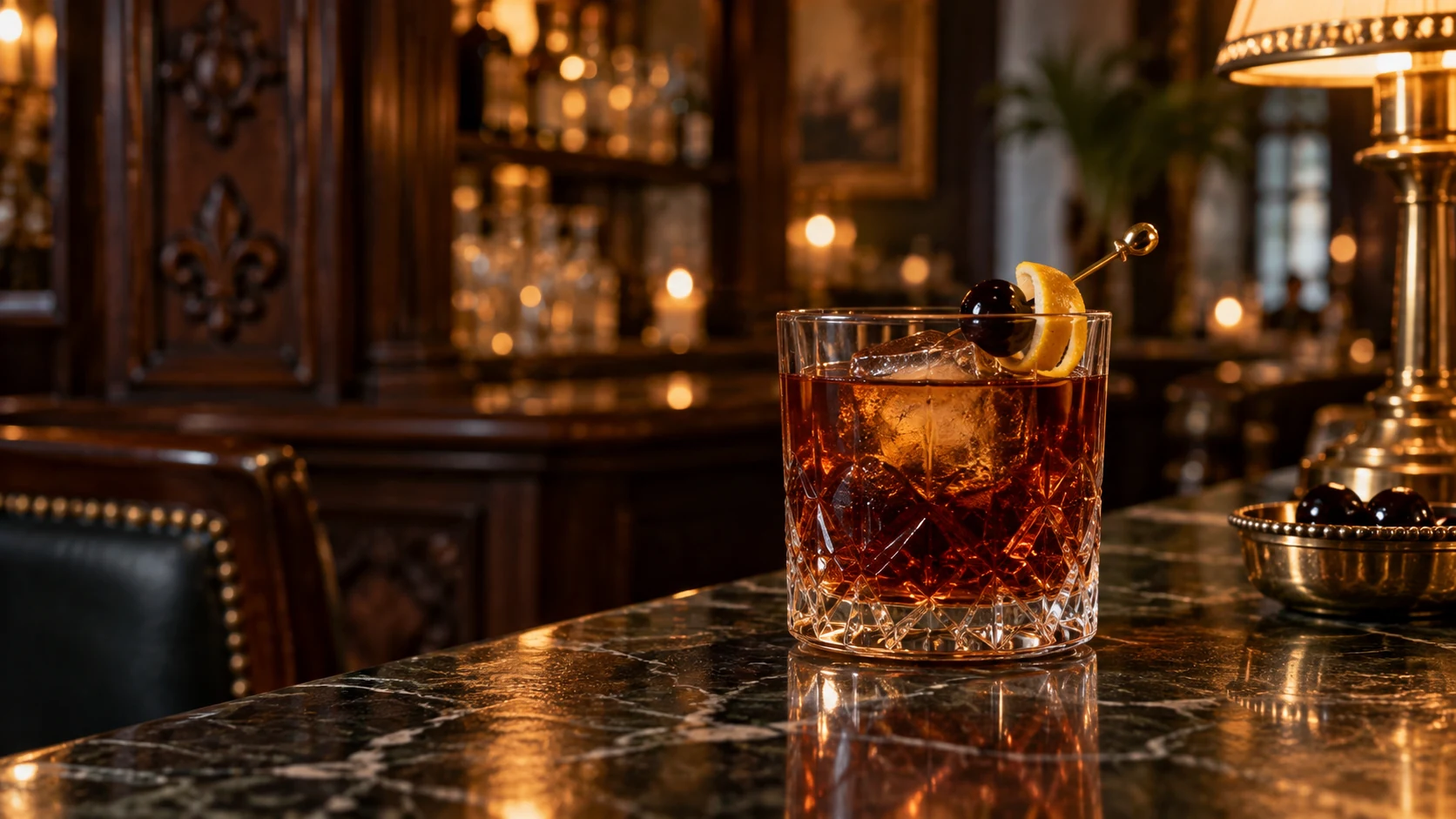
- Garnish with a lemon twist for a drier finish or a cocktail cherry for a softer nod to the Manhattan family.
Amer Picon Substitutes
Amer Picon is the ingredient that makes the Brooklyn difficult for many home bartenders, especially in the United States. It is a bitter orange aperitif with gentian-like bitterness and a dark, caramelized citrus profile. Without it, the Brooklyn can taste like rye and vermouth with a little cherry. With the right substitute, it regains its identity.
Amaro CioCiaro is one of the most common substitutes because it brings orange, cola, and bitter herbs. Bigallet China-China is another strong option, with deeper orange peel and quinine-like bitterness. Torani Amer is useful when available, though it is not identical. Some bartenders use a mix of orange liqueur and a bitter amaro, but that can make the drink too sweet unless measured carefully.
If your substitute is very sweet, use a scant 1/4 oz and reduce the maraschino to a barspoon. If it is very bitter, keep the maraschino at 1/4 oz and use a slightly richer rye. The goal is not to perfectly copy a lost bottle. The goal is bitter orange, herbal depth, and enough dryness to keep the cocktail sharp.
Dry Vermouth or Sweet Vermouth
The dry-versus-sweet vermouth question is part of the Brooklyn's charm. Grohusko's 1908 formula used a vermouth that many historians treat as closer to sweet. Straub and Craddock helped popularize the dry French vermouth line. Today's drinkers usually expect dry vermouth because that version became the craft cocktail default.
Both versions are worth making. Dry vermouth creates a lean, aromatic Brooklyn with a bitter finish. Sweet vermouth creates a rounder drink that feels closer to a Manhattan with maraschino and bitter orange. If you are making the cocktail for the first time, start with dry vermouth. If you love Manhattans and Martinez-style drinks, try the sweet-vermouth version next.
For a split-vermouth Brooklyn, use 1/2 oz dry vermouth and 1/4 oz sweet vermouth. This keeps the cocktail crisp while adding a little body. It is not the strictest historical version, but it is often the most drinkable.
Choosing the Rye
Use a rye with clear spice and enough proof to carry the liqueurs. A soft 80 proof whiskey can disappear behind vermouth and maraschino. A 95 to 100 proof rye gives the drink structure without making it hot. If your rye is very bold, increase the dry vermouth to 1 oz. If your rye is gentle, reduce the vermouth slightly.
Canadian whisky appears in some historical Brooklyn recipes, especially the Savoy version, and it can make a smooth drink. The tradeoff is that many Canadian whiskies are softer than rye. If you use Canadian whisky, choose one with rye character and keep the bitter orange component assertive.
Taste Notes
The Brooklyn should be spirit-forward, dry, and lightly bittersweet. Rye gives grain spice and warmth. Dry vermouth adds a wine-like edge. Maraschino contributes a faint cherry-almond note, but it should not taste like cherry candy. Amer Picon or its substitute should give orange peel and bitterness through the finish.
Compared with a Manhattan, the Brooklyn is less plush and more angular. Compared with an Old Pal, it is less bitter and more fragrant. Compared with a Martinez, it is darker, drier, and whiskey-driven. The best versions taste like an old New York bar recipe that has been tightened for modern palates.
Serving Tips
Serve the Brooklyn up and very cold. Because the drink has no juice and no carbonation, dilution comes entirely from stirring. Under-stirring leaves it hot and disjointed. Over-stirring makes it thin. Aim for a cold mixing glass, solid ice, and about 25 to 35 seconds of stirring depending on cube size.
A lemon twist emphasizes dryness and orange-bitter aromatics. A cherry makes the drink feel closer to the Manhattan family. An orange twist is also appropriate if your Amer Picon substitute is subtle and you want to push the citrus aroma forward.
Conclusion
The Brooklyn Cocktail is a city-named classic with more history than fame. Its printed record runs through early New York manuals, Straub, and the Savoy tradition, but its modern appeal comes from a precise balance of rye, vermouth, maraschino, and bitter orange. Choose a strong rye, keep the maraschino restrained, and use the best Amer Picon substitute you can find. The result is dry, elegant, and unmistakably linked to the borough that gave it its name.