Introduction
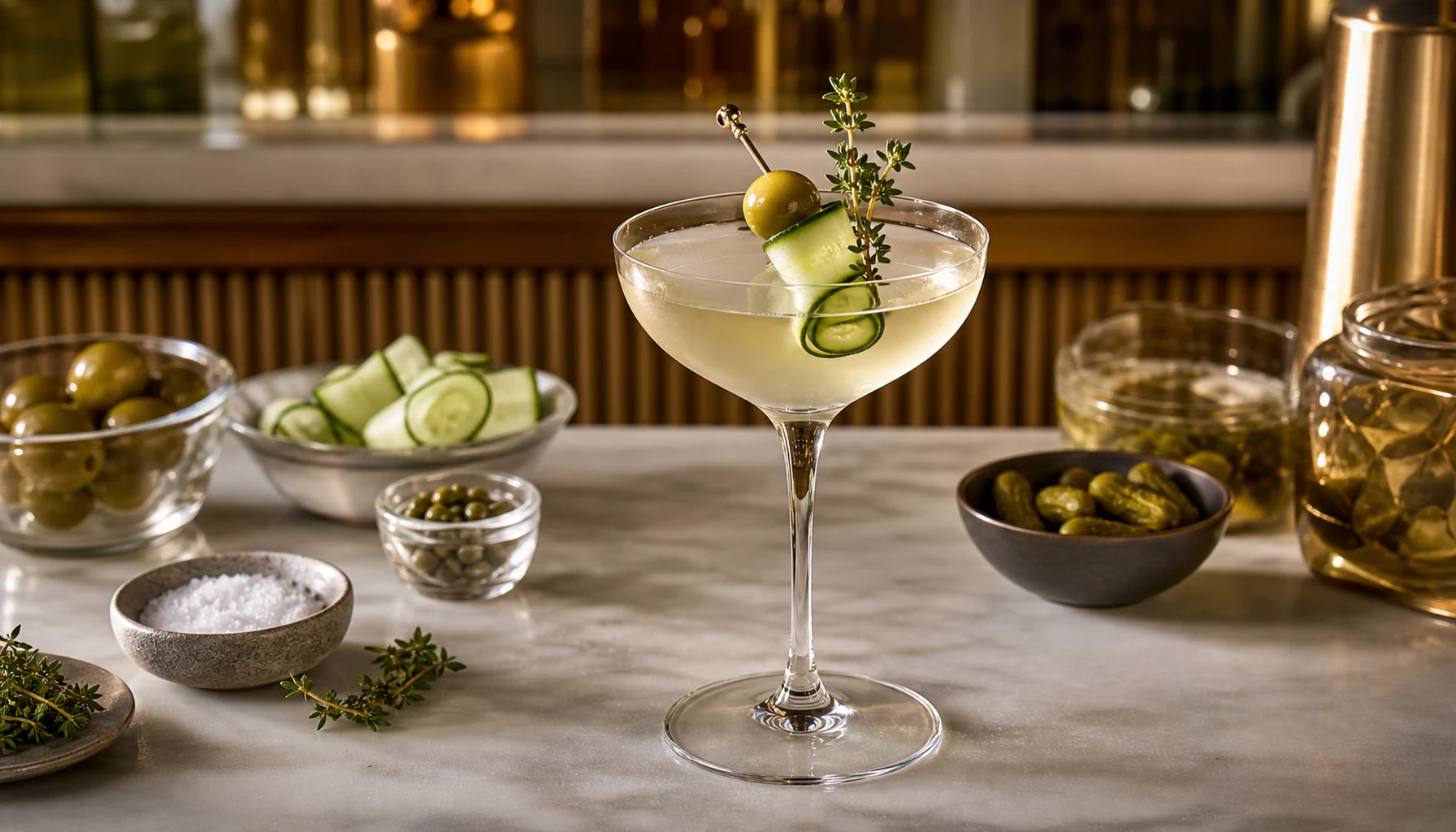
A dirty Martini is a Martini seasoned with olive brine. The base is still familiar: gin or vodka, dry vermouth, ice, and an olive garnish. What changes is the role of the olive. In a classic Martini, the olive sits at the edge of the drink and contributes aroma, salt, and a final bite. In a dirty Martini, the liquid from the olive jar becomes part of the cocktail itself.
That small addition changes the whole structure. Brine brings salt, acidity, water, and olive flavor. It makes the drink more savory, softens the sharpness of the spirit, and can add a cloudy, almost silky texture if the brine contains olive solids or if the drink is shaken. A good dirty Martini should taste cold, dry, saline, and controlled. It should not taste like a glass of olive juice with alcohol in it.
The question is not only whether to add brine, but how much. There is no single official ratio that turns a Martini dirty. In practice, the clearest starting point is equal parts dry vermouth and olive brine, usually 1/4 oz to 1/2 oz of each in a drink built with about 2 to 2 1/2 oz of gin or vodka. That gives the cocktail an unmistakable savory note while leaving the Martini recognizable.
History and Origin
The dirty Martini grew out of the older Martini rather than appearing as a completely separate invention. The Martini's late nineteenth- and early twentieth-century evolution moved from sweeter gin-and-vermouth ancestors toward the drier, cleaner format people recognize today. As the drink became drier, garnish choices mattered more. Lemon peel made the drink brighter and more aromatic. Olives made it more savory.
The common origin story for the dirty Martini points to New York bartender John E. O'Connor in the early 1900s, who is often credited with moving olive flavor from garnish into the drink by muddling olives or adding their liquid. Like many cocktail origin stories, the exact details are difficult to prove cleanly. What is clear is that the idea became especially popular much later, when vodka Martinis, larger glassware, and more casual interpretations of the Martini entered mainstream drinking culture.
That messy history is useful because it explains the drink's range. Some bartenders think of a dirty Martini as a precise classic with a measured dose of brine. Others think of it as a guest preference that can move from barely savory to aggressively salty. The best home approach is to treat dirty as a controlled seasoning choice, not as permission to overload the glass.
What Makes a Martini Dirty
Olive brine is the defining ingredient. A Martini with olive garnish but no brine is not usually considered dirty. A Martini with brine, olive juice, or muddled olive is. The base can be gin or vodka, and both are common. Gin gives the drink botanical structure, which can stand up well to salt and olive flavor. Vodka creates a cleaner canvas and lets the brine become the dominant character.
Dry vermouth still matters. Many weak dirty Martinis are made by replacing vermouth with brine entirely, which removes the wine-like herbal backbone that makes the drink feel like a Martini. Vermouth contributes acidity, bitterness, aroma, and length. Brine contributes salt and olive depth. They do different jobs.
For a balanced dirty Martini, think of brine as a seasoning ingredient first. Start small, taste, and increase only if the drink needs it. The brine should make the spirit feel colder, rounder, and more savory. If the drink becomes flat, harsh, or aggressively salty, the brine has taken over.
Ratio and Technique
A reliable dirty Martini ratio is:
Ingredients:
- 2 1/4 oz gin or vodka
- 1/2 oz dry vermouth
- 1/4 oz olive brine
- 1 dash orange bitters, optional
- 2 green olives for garnish
Instructions:
- Chill a coupe, Nick and Nora, or Martini glass.
- Add gin or vodka, dry vermouth, olive brine, and optional bitters to a mixing glass.
- Fill the mixing glass with hard ice.
- Stir until very cold and properly diluted, usually 25 to 35 seconds.
- Strain into the chilled glass.
- Garnish with two olives.
This version uses a 2:1 ratio of vermouth to brine. It reads as dirty, but still clean. For a more obviously dirty profile, use 1/2 oz dry vermouth and 1/2 oz olive brine. That 1:1 vermouth-to-brine ratio is the practical benchmark for a savory dirty Martini at home. For a very dry dirty Martini, use 2 1/2 oz spirit, 1/4 oz vermouth, and 1/4 oz brine.
Shaking is common, especially in vodka dirty Martinis, but it changes the texture. A shaken dirty Martini becomes colder faster, more aerated, and more opaque. Stirring keeps the drink clearer and more elegant. If the brine is clean and you want a polished drink, stir. If you want a frosty, cloudy, bracing version, shake hard and double strain.
Choosing Olives and Brine
The olive matters because the brine is only as good as the olives it carries. Cheap, harsh brine can make the drink taste metallic or sour. Taste the brine before it goes into the cocktail. It should be salty, lightly acidic, and recognizably olive-like, not muddy or sharp.
Castelvetrano olives are a strong choice for a high-end dirty Martini because they are buttery, green, and relatively mild. They make the drink savory without overwhelming it. Manzanilla or queen olives give a more classic cocktail-bar profile: firm, briny, and familiar. Cerignola and Gordal olives are larger and softer in flavor, useful when you want a generous garnish and a rounder brine.
Avoid brine from olives packed with strong flavorings unless that is the point of the drink. Blue cheese, garlic, chili, anchovy, and herb-stuffed olives can be fun, but they quickly move the Martini into a different category. They also add oils and solids that can cloud the drink and shorten the finish.
If you want consistency, keep a dedicated bottle of cocktail olive brine in the refrigerator. Jar brine changes as olives are removed and handled. A clean, separate brine gives better repeatability. Do not replace olive brine with plain saline and expect the same result. Saline adds salt, but it does not add olive flavor, acidity, or the subtle vegetal note that defines the drink.
Texture and Dilution
Brine affects more than flavor. It adds water before the drink ever touches ice, which means it contributes to dilution. A quarter ounce is modest. A half ounce is meaningful. One ounce or more can make the cocktail loose unless the rest of the ratio is adjusted.
Salt changes perception too. It can make the drink feel rounder and less hot, especially with vodka. It can also make vermouth taste more aromatic and reduce the sense of bitterness. That is why a small amount of brine can make a Martini feel smoother even when the alcohol content remains high.
Cloudiness comes from olive solids, oil, and aeration. A clear brine stirred carefully may leave the drink only faintly hazy. A cloudy brine, muddled olive, or hard shake will create a visibly dirty drink. Neither approach is automatically better. The right choice depends on whether you want elegance or impact.
When batching dirty Martinis for the freezer, count the brine as part of the water in the drink. A freezer Martini usually needs measured dilution because it will not be stirred with ice at service. If your batch includes 1/2 oz brine per serving, reduce the added water slightly and taste before freezing.
Dirty, Extra Dirty, and Filthy
The terms are not standardized, but they are useful if you define them by intensity:
- Dirty: 1/4 oz olive brine in a standard Martini, or enough to add a clear savory note.
- Extra dirty: 1/2 oz to 3/4 oz brine, with olive flavor becoming a main feature.
- Filthy: 1 oz or more brine, often with muddled olives, multiple olives, or deliberately cloudy texture.
A dirty Martini should still taste like a Martini. An extra dirty Martini tastes like a Martini and olives in equal partnership. A filthy Martini pushes olive brine to the front and accepts a heavier, saltier, cloudier drink.
The technical difference is balance. As brine increases, you usually need to protect structure. That can mean using a stronger gin, keeping some vermouth, stirring with very cold hard ice, or serving a smaller pour. A huge filthy Martini often becomes tiring before the glass is finished. A smaller, colder one can be excellent.
Serving Tips
Keep the glass cold and the portion controlled. Dirty Martinis are spirit-forward, and the salt makes them easy to drink quickly. A 3 oz finished pour often feels better than an oversized glass.
Use fresh vermouth. Brine can cover some flaws, but it cannot rescue stale vermouth. Store vermouth in the refrigerator and replace it when it loses brightness. The drink is simple enough that every ingredient shows.
For food, lean into the savory profile. A dirty Martini works well with oysters, shrimp cocktail, anchovy toast, potato chips, salted almonds, hard cheese, or fried snacks. The cocktail behaves almost like an appetizer: cold, saline, and appetite-opening.
Conclusion
A dirty Martini is not just a Martini with olive juice splashed in. It is a Martini seasoned with brine, and seasoning requires control. Start with gin or vodka, keep dry vermouth in the structure, add brine in measured amounts, and choose olives that taste good enough to drink from. At 1/4 oz brine, the drink is dry and savory. At 1/2 oz, it is clearly dirty. Beyond that, it moves toward extra dirty or filthy. The best version is the one that keeps the olive character vivid without losing the cold, elegant shape of the Martini.