Introduction
The Vieux Carre is one of the great New Orleans cocktails, but it is not as simple as its equal-parts reputation suggests. The drink brings together rye whiskey, cognac, sweet vermouth, Benedictine, Peychaud's bitters, and Angostura bitters. That is a crowded cast. When the balance is right, the cocktail tastes deep, spiced, slightly herbal, and unmistakably old-world. When the balance is wrong, it can become heavy and sweet.
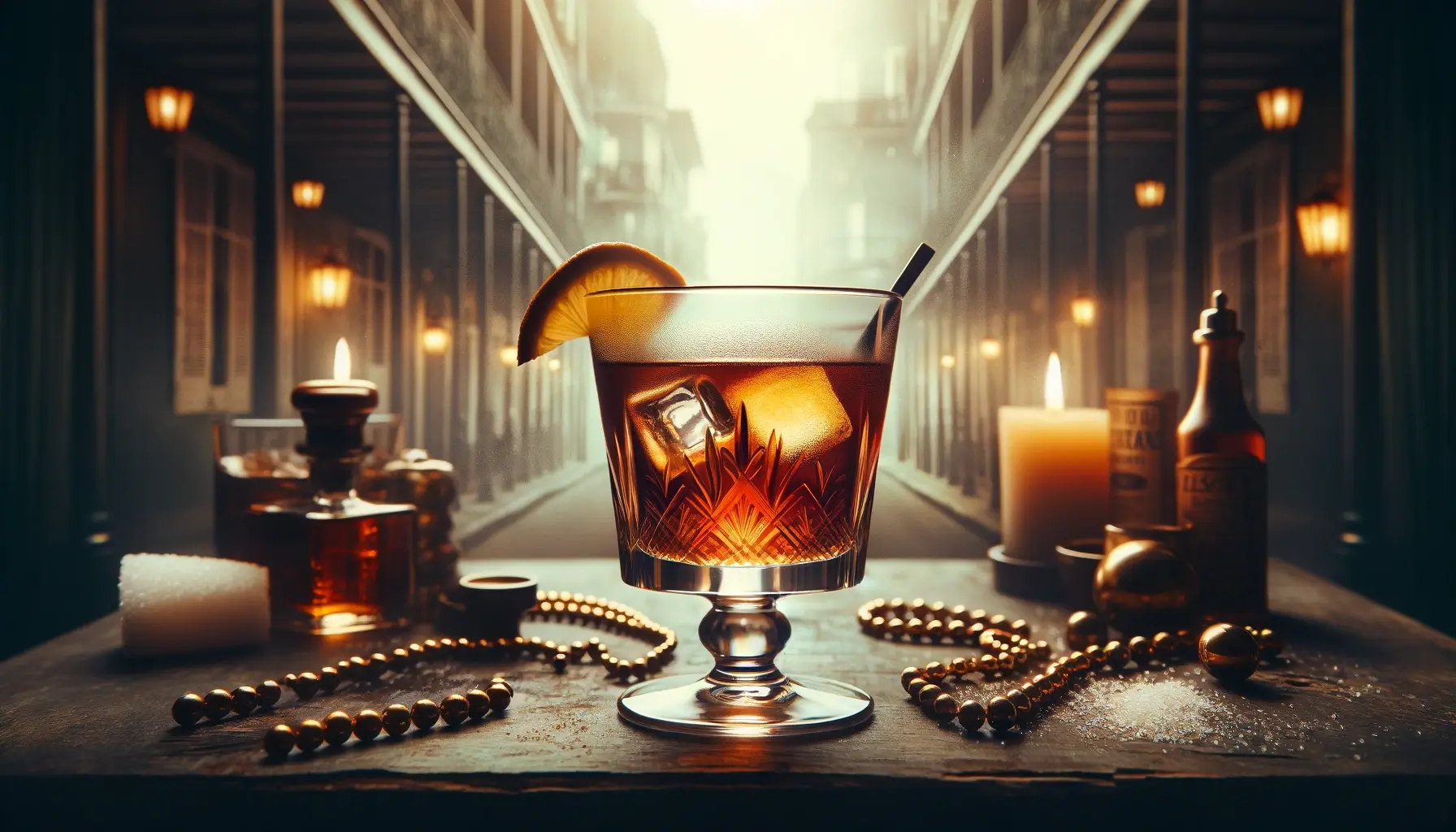
The name means "old square" and refers to the French Quarter, the historic neighborhood at the center of New Orleans cocktail culture. That makes the Vieux Carre a city drink in a very literal way. It does not just come from New Orleans; it is named for one of the city's defining places. For searchers looking for a Vieux Carre cocktail recipe, the key is understanding how the drink expresses that neighborhood: French cognac, American rye, Italian-style vermouth, monastic liqueur, and New Orleans bitters all meeting in one glass.
This guide covers the Hotel Monteleone origin story, the role of the Carousel Bar, a balanced home recipe, and the small choices that decide whether the Vieux Carre tastes luxurious or muddy.
History and Origin
The Vieux Carre is credited to Walter Bergeron, head bartender at Hotel Monteleone in New Orleans. Hotel Monteleone places the creation in 1938, and the drink remains closely tied to the hotel's Carousel Bar identity. NewOrleans.com also connects the cocktail to Bergeron and to the French Quarter neighborhood that gave the drink its name.
The timing matters. The late 1930s were a period when American bars were rebuilding after Prohibition, and New Orleans had a stronger historical cocktail memory than many cities. The Sazerac, Ramos Gin Fizz, Brandy Crusta, and other local drinks had already made the city a serious cocktail capital. The Vieux Carre fits that lineage because it feels composed rather than improvised. It is not a sour, a highball, or a simple two-ingredient drink. It is a stirred, spirit-forward cocktail with layers of regional identity.
Rye whiskey gives the drink American spice. Cognac brings French depth and dried fruit. Sweet vermouth adds wine, bitterness, and softness. Benedictine contributes honeyed herbs. Peychaud's bitters tie it back to New Orleans, while Angostura adds darker baking spice. The recipe is almost a map of drinking traditions moving through the French Quarter.
Vieux Carre Cocktail Recipe
This version keeps the classic equal-parts base but uses a measured Benedictine pour so the drink stays balanced. If you prefer a richer Carousel Bar-style profile, increase the Benedictine to 1/2 oz.
Ingredients:
- 3/4 oz rye whiskey
- 3/4 oz cognac
- 3/4 oz sweet vermouth
- 1/4 oz Benedictine
- 2 dashes Peychaud's bitters
- 2 dashes Angostura bitters
- Lemon twist or cocktail cherry for garnish
Instructions:
- Add the rye whiskey, cognac, sweet vermouth, Benedictine, and both bitters to a mixing glass.
- Fill the mixing glass with ice and stir until the drink is very cold and lightly diluted.
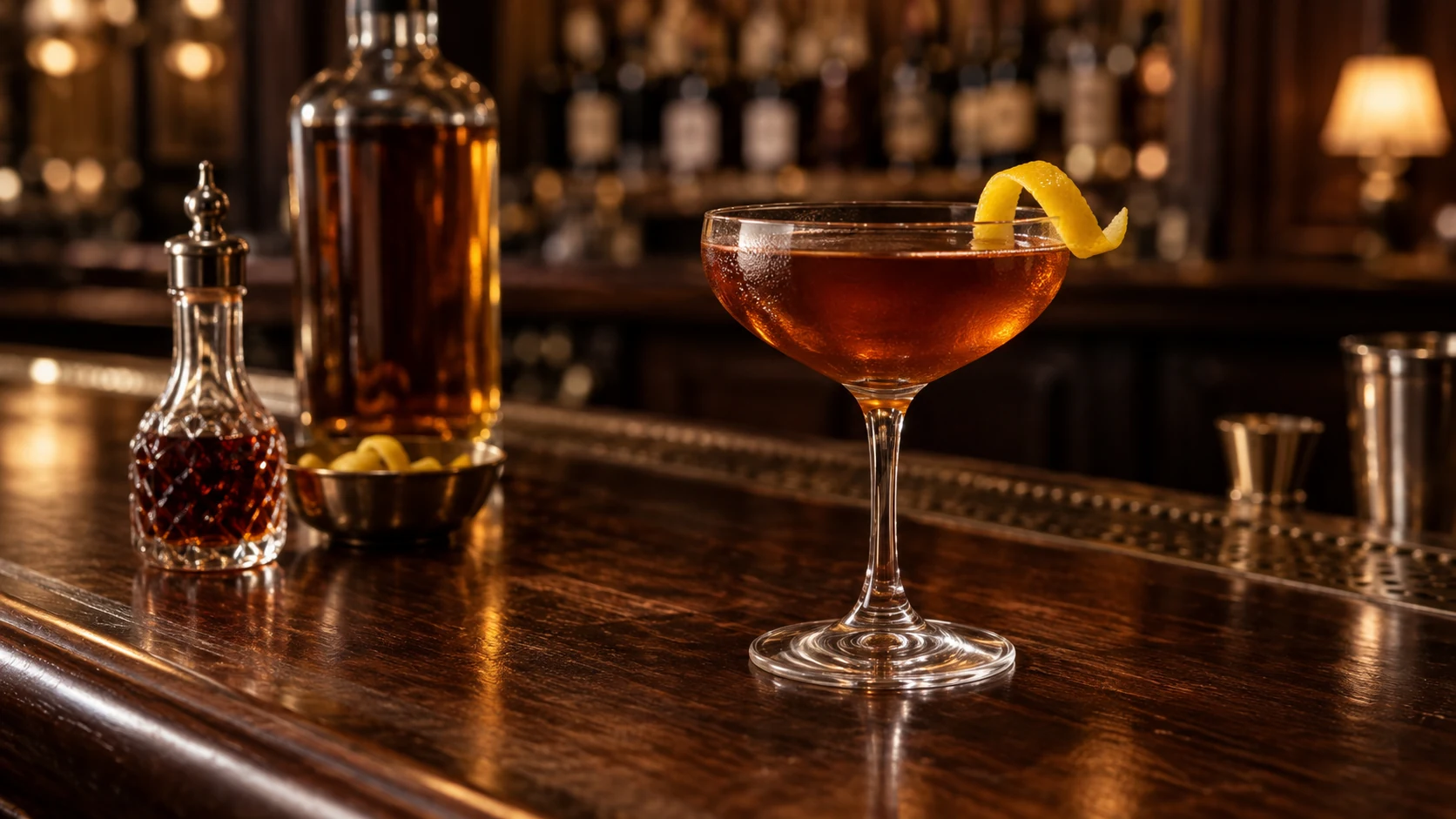
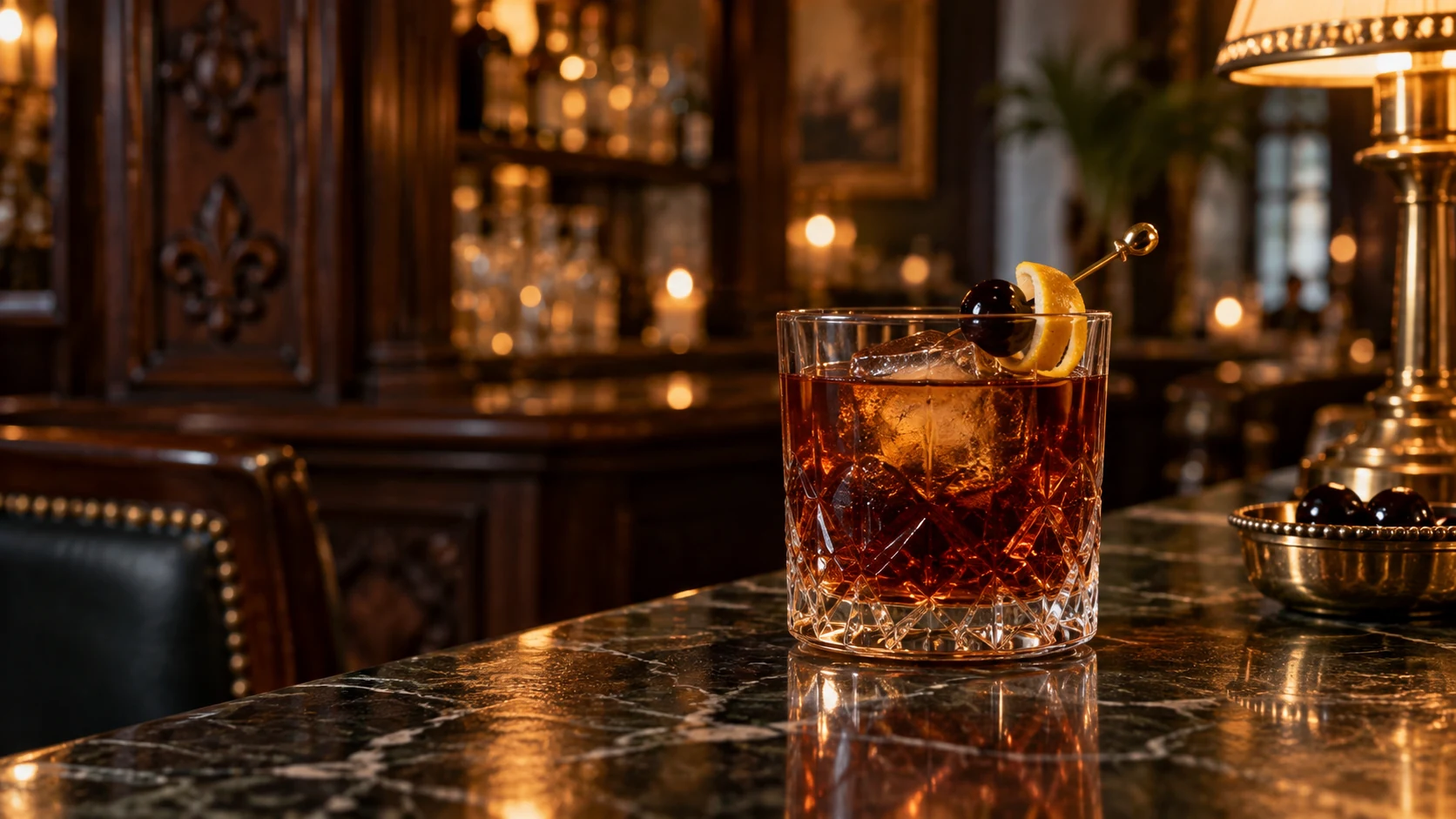
- Strain into a chilled coupe or into a rocks glass over one large cube.
- Express a lemon twist over the surface and garnish with the twist, or use a cocktail cherry for a rounder presentation.
Ratio and Balance
The Vieux Carre looks easy because the main spirits are equal parts. The difficulty is that the ingredients do not have equal force. Rye is spicy and direct. Cognac is round and fruit-driven. Sweet vermouth changes dramatically from bottle to bottle. Benedictine is powerful even in small amounts.
Start with a rye that has enough proof and spice to stand up to the other ingredients. A 90 to 100 proof rye works better than a soft, low-proof whiskey. For cognac, use a solid VSOP or a mixing-friendly 1840-style cognac. You do not need an expensive bottle, but you do need enough fruit and oak to make the cognac visible in the finished drink.
Sweet vermouth is the quiet decision that controls the whole cocktail. A vanilla-heavy vermouth makes the drink plush. A bitter, herbal vermouth makes it drier and more complex. Keep vermouth refrigerated and replace old bottles. Oxidized vermouth makes the Vieux Carre taste flat, no matter how good the whiskey and cognac are.
Benedictine and Bitters
Benedictine is where many versions become too sweet. The liqueur brings honey, saffron-like warmth, and layered herbs, but it can dominate quickly. A 1/4 oz pour gives the drink lift without turning it syrupy. A 1/2 oz pour is historically common and can be delicious, especially if your rye is strong and your vermouth is bitter, but it is less forgiving.
Use both Peychaud's and Angostura bitters. Peychaud's gives the drink a red-fruit, anise, and New Orleans signature. Angostura gives darker spice and structure. Together they help the Vieux Carre finish dry enough to invite another sip.
Taste Notes
A good Vieux Carre should feel rich but not sticky. The first impression is usually rye spice and vermouth, followed by cognac fruit, honeyed Benedictine, and a bitter-herbal finish. The drink has some Manhattan DNA, but it is rounder and more ornate. It also has some Sazerac atmosphere, but without the absinthe rinse or the stark whiskey-and-bitters frame.
Serve it slightly colder than you might serve a Manhattan. The extra liqueur and vermouth benefit from proper dilution. If the drink tastes hot, stir longer. If it tastes sweet and heavy, reduce Benedictine or choose a drier vermouth next time. If it tastes thin, use a higher-proof rye.
Occasions and Pairings
The Vieux Carre is an after-dinner or late-evening cocktail, especially when served up in a chilled coupe. Over a large cube, it becomes slower and more contemplative. It pairs well with New Orleans-style dishes that have spice, smoke, and richness: gumbo, andouille, oysters Rockefeller, or roast pork. It also works with dark chocolate, pecan desserts, and strong cheeses.
Because the drink is built from multiple spirits and liqueurs, it is an excellent cocktail for teaching balance. Make one version with 1/4 oz Benedictine and another with 1/2 oz. Try two vermouths side by side. The base recipe stays the same, but the drink changes dramatically.
Conclusion
The Vieux Carre cocktail is more than a New Orleans classic with a French name. It is a compact history of the French Quarter in liquid form: rye, cognac, vermouth, Benedictine, and two bitters sharing one chilled glass. Respect the power of the sweet ingredients, stir it properly, and let the rye and cognac both speak. The result is a cocktail with enough richness for history lovers and enough precision for serious home bartenders.