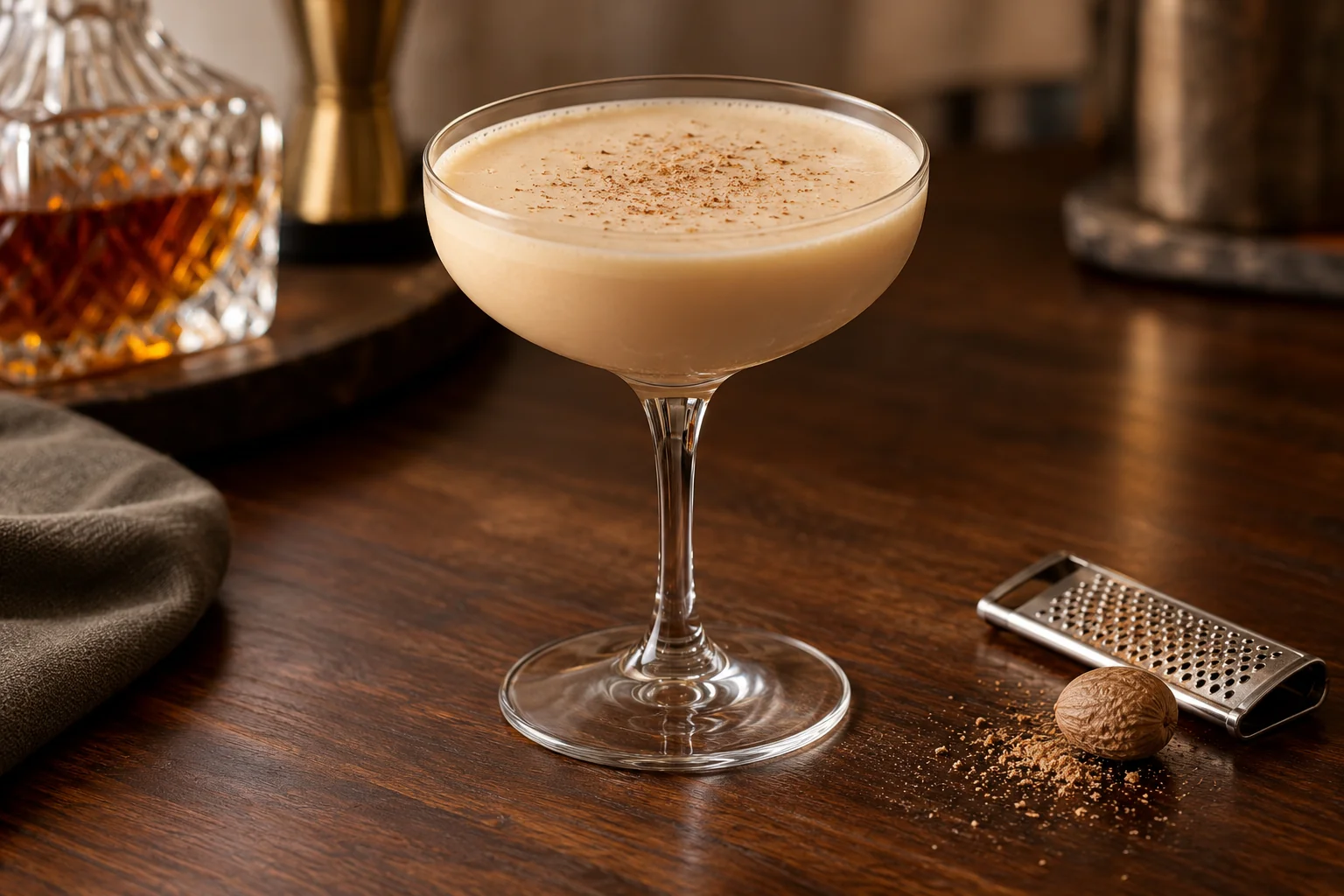
A Brandy Alexander is a chilled dessert cocktail made with equal parts cognac, brown crème de cacao and fresh cream, finished with grated nutmeg. It is creamy and chocolatey, with enough brandy character to feel like a cocktail rather than a milkshake.
The appeal is its simplicity: three measured ingredients, a short shake and a small stemmed glass. This version suits an after-dinner drink or a relaxed autumn evening, especially when you want chocolate flavor without brewing coffee or melting anything.
Jump to the recipe, or read the ingredient notes below before choosing your cacao liqueur.
Brandy Alexander cocktail recipe
This uses the equal-parts cognac specification published as Alexander by the International Bartenders Association. The cream suggestions and serving tips are practical home-bar guidance.
Makes: 1 cocktail. Prep and total time: 5 minutes. Equipment: shaker, jigger, strainer, small coupe and nutmeg grater.
Ingredients
- 30 ml cognac (approximately 1 US fl oz)
- 30 ml brown crème de cacao (approximately 1 US fl oz)
- 30 ml fresh pouring cream, such as heavy cream (approximately 1 US fl oz)
- Ice for shaking
- A light dusting of freshly grated nutmeg
Use either the milliliter measures or equal 1 oz pours throughout. The ounce amounts are rounded, so consistency matters more than mixing measuring systems.
Method
1. Chill the glass
Chill a small coupe with ice water while you measure the ingredients. Empty the glass before straining the drink.
2. Measure and shake
Add the cognac, brown crème de cacao and cream to a shaker. Fill with ice and shake briskly for about 10–15 seconds, until the shaker feels cold.
3. Strain and garnish
Strain into the chilled coupe without ice. Grate a little nutmeg over the surface and serve immediately.
What does a Brandy Alexander taste like?
The first impression is cocoa and cream, followed by the warmth of the cognac and the aroma of nutmeg. The exact balance depends on the bottles you use: a strongly flavored cacao liqueur makes the chocolate more prominent, while the cognac can bring fruity or woody notes.
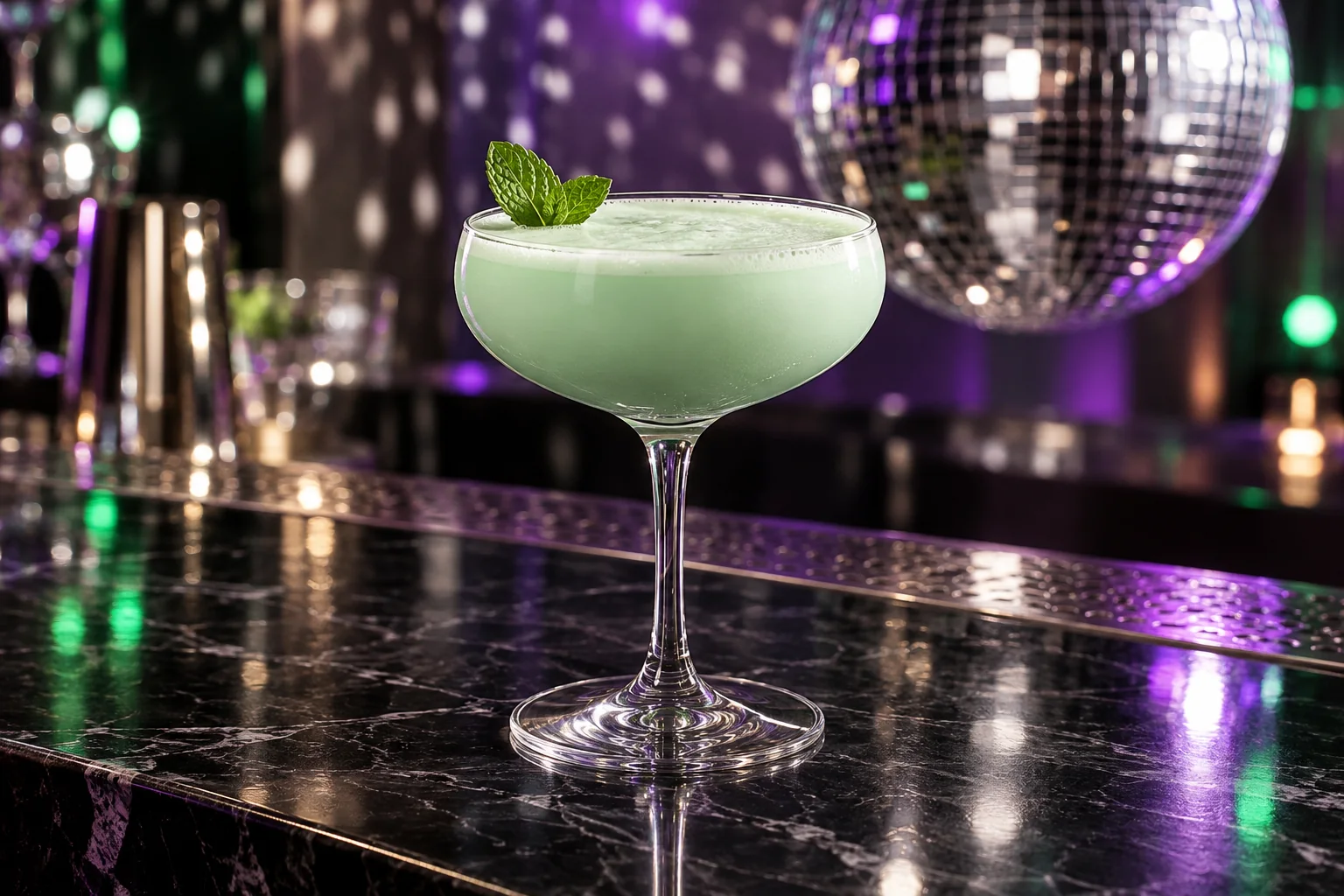
Expect a sweet, compact drink. The recipe contains no added syrup because the liqueur already supplies sweetness. Its texture should remain pourable and lightly aerated. If you want mint with your chocolate instead, the Grasshopper cocktail is a useful next recipe.
Choosing cognac, crème de cacao and cream
Cognac or another brandy?
Use cognac to follow the recipe above. Choose a bottle you enjoy mixing; cream and cacao will soften its character, so an expensive sipping bottle is not necessary for this serving idea.
A plain grape brandy can be tried in the same measure as a variation, with a different flavor depending on the bottle. Avoid assuming that a sweetened fruit-flavored brandy liqueur is equivalent: it may change the sweetness as well as the spirit character.
Brown or white crème de cacao?
Brown crème de cacao is the specified ingredient and gives the drink its warm beige color. Look for a chocolate liqueur labeled crème de cacao, rather than chocolate syrup or a chocolate cream liqueur.
The word “crème” does not by itself mean dairy cream. For example, Giffard describes its brown crème de cacao as a cocoa-extract liqueur and lists it as lactose-free. Check your own bottle rather than assuming every chocolate liqueur has the same ingredients.
White crème de cacao can be used if that is what you have; expect a paler drink, and potentially a different sweetness or cocoa profile. Keep the same amount for the first attempt so you can judge that one change.
Which cream works best?
Start with cold, unsweetened heavy cream for a rich texture. A lighter pouring cream makes a less full-bodied variation. Whipped cream from a can, sweetened condensed milk and ice cream are different ingredients and are not direct replacements in this shaken recipe.
Keep the cream refrigerated until mixing. Prepare the glasses and nutmeg first so the finished drink can go straight from shaker to table.
Getting a silky texture without a watery finish
Use solid ice and measure the cream instead of pouring by eye. Shaking chills the drink, incorporates a little air and adds dilution; all three contribute to the texture. Strain promptly once cold.
If the drink tastes thin, check that you used pouring cream rather than milk and that the ice had not already melted heavily in the shaker. If it tastes too rich, try lighter cream on your next serving. Avoid correcting either problem with a large unmeasured splash: it becomes harder to work out which change helped.
Use a small coupe rather than filling an oversized Martini glass. A fine layer of nutmeg is enough; a thick blanket of spice can dominate the first sip. For more on removing stray ice chips, see how to double-strain a cocktail.
Making two or four servings
For two drinks, use 60 ml each of cognac, cacao liqueur and cream. Shake together only if your shaker has room for plenty of ice and movement; otherwise make one at a time.
For four drinks, measure 120 ml of each ingredient in total, then divide into two equal shaker batches. Chill four glasses first and garnish each pair just before serving. Scale the liquid measures, but use fresh ice for each batch rather than reusing the wet ice from the first shake.
If you are offering a second after-dinner option, an Espresso Martini gives coffee lovers a contrasting choice without dairy cream in its usual recipe.
Frequently asked questions
Does a Brandy Alexander contain ice cream?
This recipe does not. It uses liquid cream and is shaken with ice, then strained. Blended ice-cream versions are variations with a thicker texture and different sweetness.
Can I use Baileys instead of crème de cacao?
It will make a different drink. Irish cream combines its own spirit, sweetness, dairy and flavorings; it does not replace just the chocolate component. Use brown crème de cacao for the recipe shown here.
Can I make it without dairy?
Try an unsweetened plant-based pouring cream in the same amount as a starting point. The flavor and texture will differ, and the liqueur label still needs checking if you are choosing ingredients for a dietary requirement.
Do I need extra sugar or chocolate syrup?
No. Start with the three measured ingredients. Adding syrup makes the cocktail sweeter and can obscure the balance between cognac, cacao and cream.
Should a Brandy Alexander be served over ice?
The recipe above is served without ice in a chilled stemmed glass. Ice belongs in the shaker and is strained out before serving.