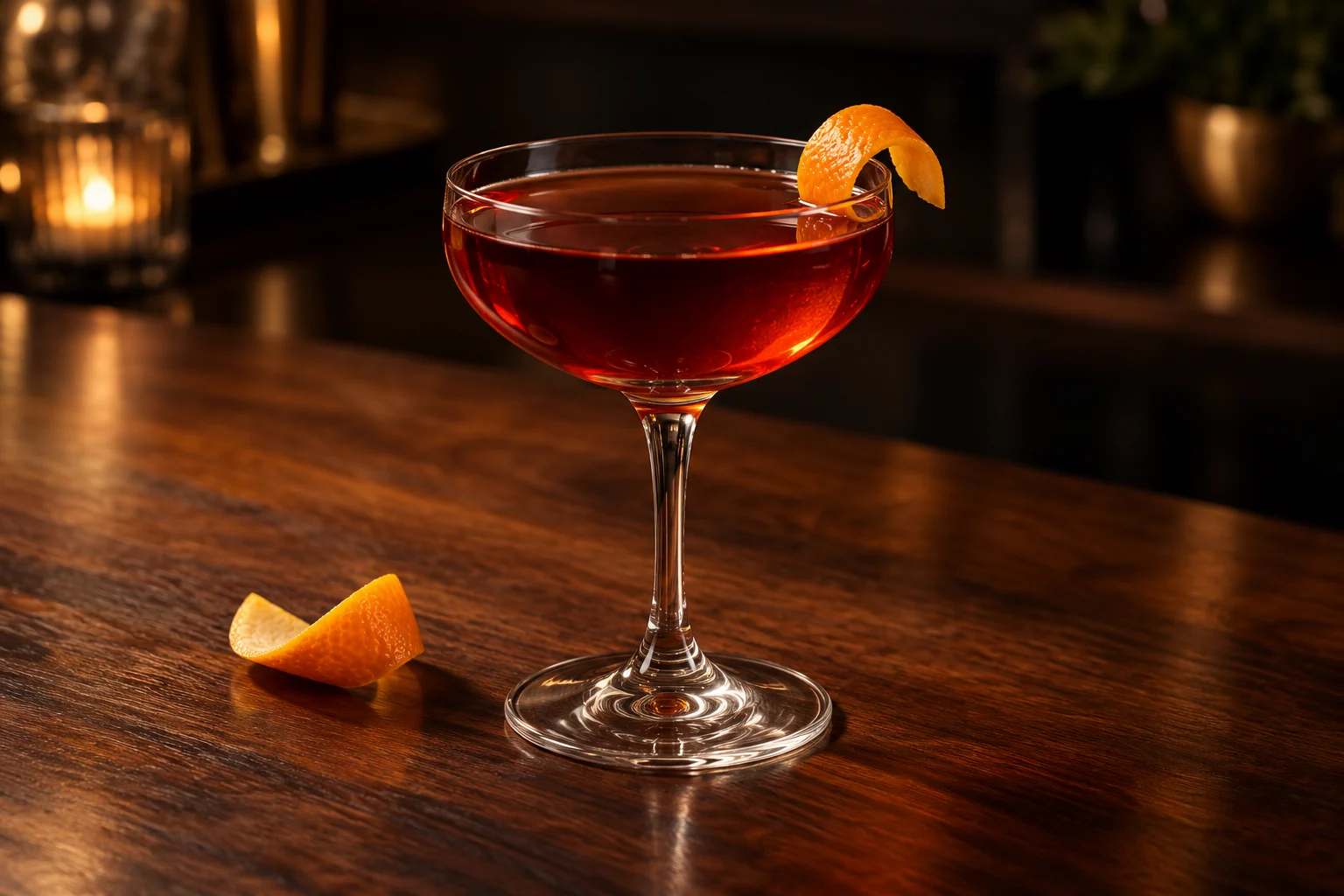
A Boulevardier cocktail combines whiskey, Campari, and sweet red vermouth into a rich, bittersweet drink. This recipe uses 45 ml whiskey, 30 ml Campari, and 30 ml vermouth, stirred with ice and served in a chilled coupe with orange peel.
If you like a Negroni but want the roundness of whiskey, this is a useful next recipe. There is no juice to squeeze or syrup to prepare. The main decisions are which whiskey to pour, how much to chill it, and whether to serve it up or over ice.
Boulevardier cocktail recipe
The measures and served-up method follow the International Bartenders Association's Boulevardier. The timing and troubleshooting notes are practical home-bar guidance.
Makes: 1 cocktail. Prep and total time: 5 minutes. Equipment: mixing glass or sturdy jug, measure, long spoon, strainer, coupe.
Ingredients
- 45 ml bourbon or rye whiskey (about 1½ US fl oz)
- 30 ml Campari (about 1 US fl oz)
- 30 ml sweet red vermouth (about 1 US fl oz)
- Ice for stirring
- 1 strip orange peel, for garnish
Instructions
1. Chill the serving glass
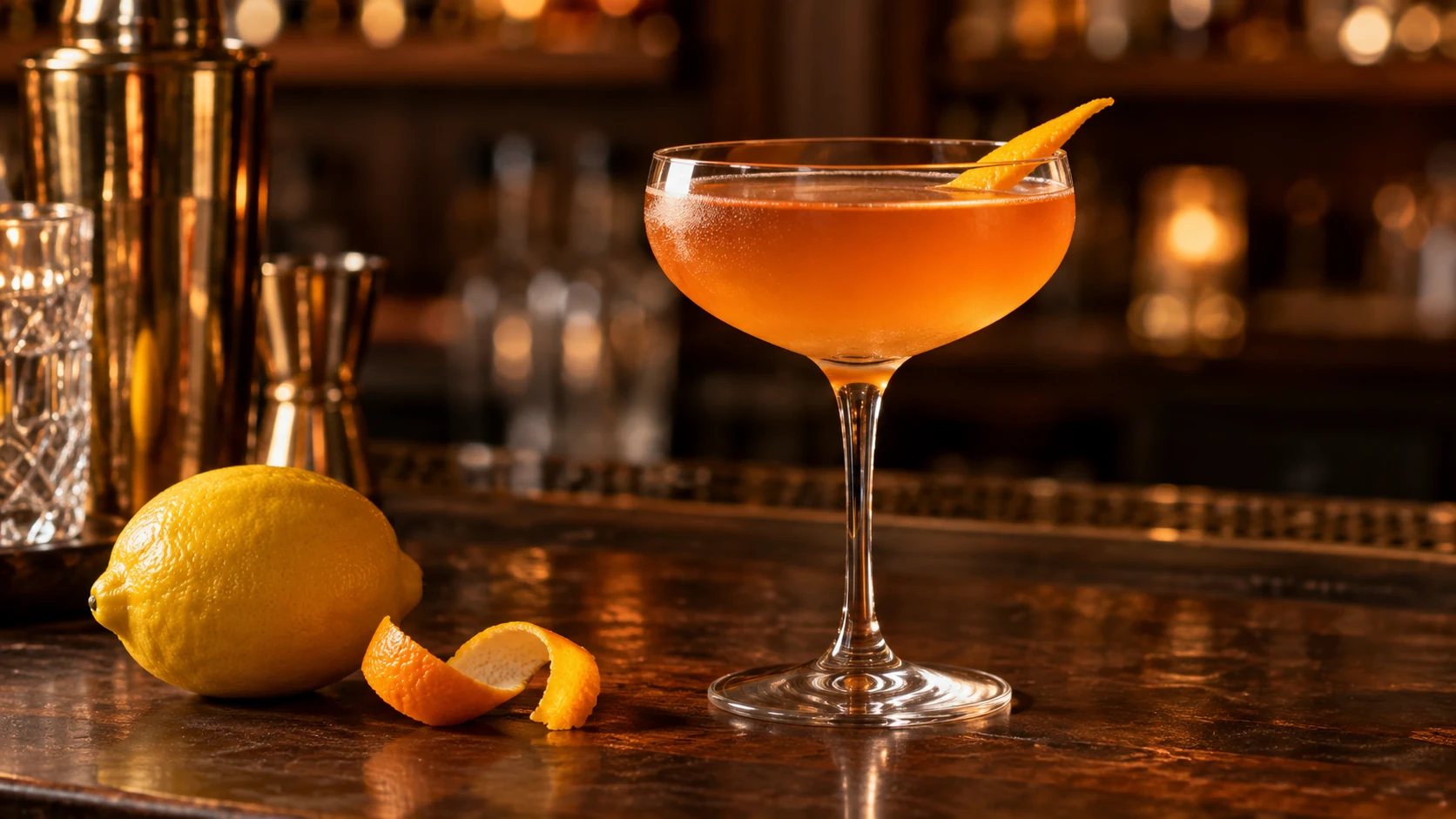
Fill a coupe with ice water while you prepare the drink. Cut a small strip of orange peel, keeping the thick white pith to a minimum.
2. Measure the three ingredients
Pour the whiskey, Campari, and sweet red vermouth into a mixing glass. Add plenty of ice.
3. Stir until cold
Stir smoothly for about 20–30 seconds. The mixing glass should feel cold; taste a small spoonful and stir a little longer if the drink still feels warm or harsh.
4. Strain and garnish
Empty the coupe and strain in the cocktail, leaving the mixing ice behind. Gently squeeze the orange peel over the surface to release its oils, then add it as a garnish.
What is the best Boulevardier ratio?
Start with 1½ parts whiskey to 1 part Campari to 1 part sweet vermouth, also written 3:2:2. It gives the whiskey a little more room than an equal-parts build. Keep the order clear when reading ratios: whiskey comes first here.
There are other established specifications. Campari Academy's US recipe uses 1½ oz bourbon and ¾ oz each Campari and vermouth, a 2:1:1 ratio. That is a useful comparison if you want a more whiskey-led version. It changes both the serving size and the proportions, so measure the complete recipe rather than adding an extra splash to an already finished drink.
Bourbon or rye: which should you use?
Bourbon is a good starting point if you want vanilla and caramel notes alongside the bitter orange. Rye can give a spicier impression. Individual bottles vary, so treat those descriptions as a guide rather than a guarantee.
Use a whiskey you already enjoy in mixed drinks. A very high-proof bottle can make the same recipe feel much more forceful. Make the first serving with the measured recipe, then change only one ingredient next time so you can tell what made the difference.
For another way to combine whiskey and sweet vermouth, try a Manhattan. For whiskey without vermouth or Campari, an Old Fashioned gives you a different starting point.
Choose sweet red vermouth, not dry vermouth
Look for sweet red, rosso, or rouge vermouth. Dry vermouth changes the balance substantially; it is not a like-for-like replacement here. Likewise, the Campari is a measured ingredient, not a few dashes of aromatic bitters.
Start with a freshly opened or well-kept bottle of vermouth and follow its storage instructions. Before mixing, taste a small amount on its own. A tired or unpleasant ingredient cannot be rescued simply by adding more whiskey.
Boulevardier vs Negroni
The obvious difference is the base spirit: a Negroni uses gin, while a Boulevardier uses whiskey. Expect the whiskey drink to emphasize barrel-derived flavors where gin brings its botanicals. Both can be bitter and aromatic; choosing whiskey does not turn the drink into a sweet whiskey sour.
Our Boulevardier also gives the base spirit a larger share than the familiar equal-parts Negroni. If you are comparing the two at home, note the ratio as well as the spirit so you know what you are tasting.
Serve it up or on the rocks?
The main recipe uses a chilled coupe without serving ice. That gives you the finished dilution immediately. Hold the glass by its stem and serve as soon as you strain.
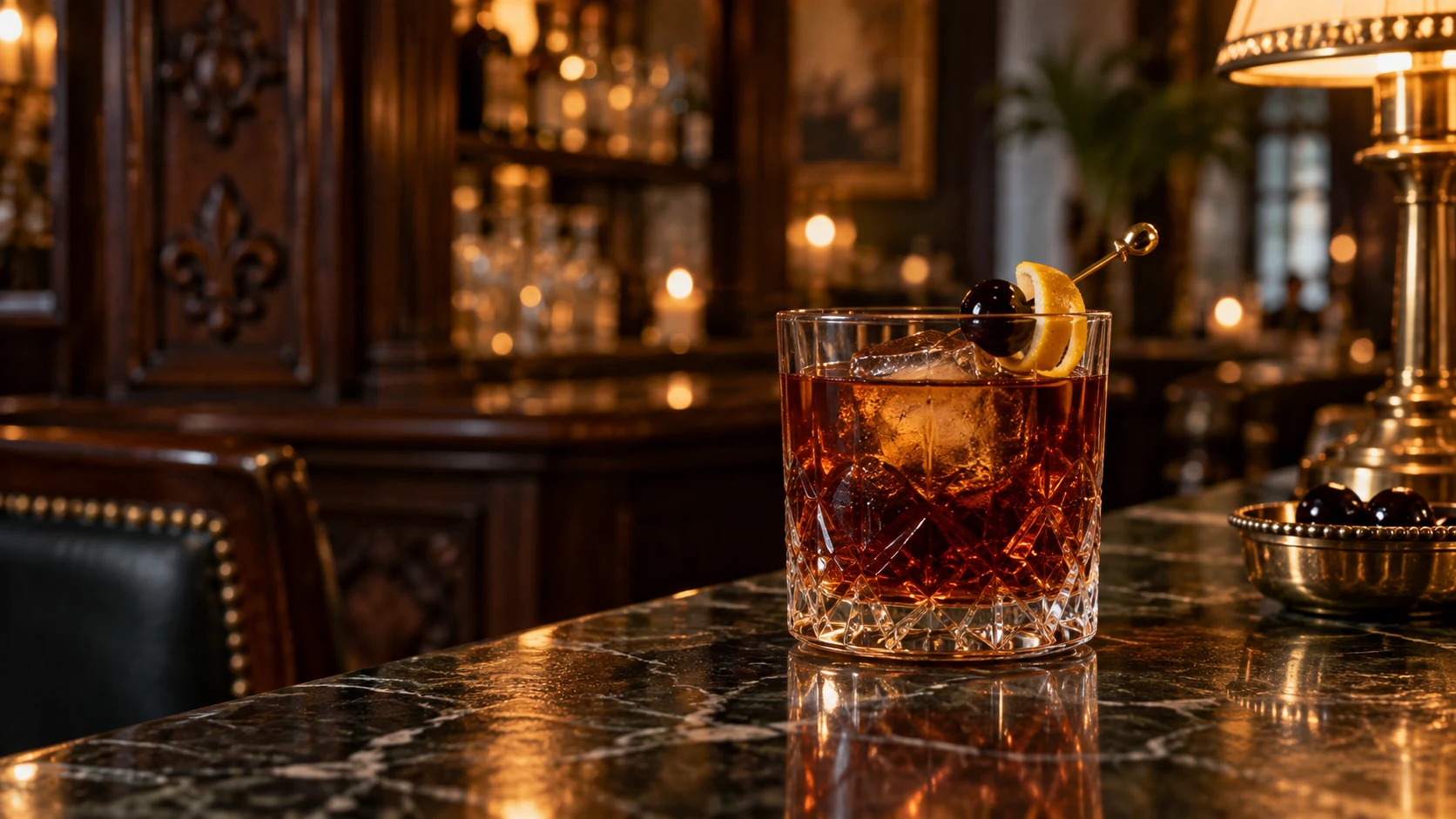
For an alternative, strain over one large fresh ice cube in a rocks glass. Angel's Envy's Boulevardier recipe describes both serving styles. The rocks version keeps changing as its ice melts, so avoid leaving it sitting before serving. The hero image illustrates the served-up recipe.
Troubleshooting the first glass
- Too bitter: first confirm that you measured Campari and used sweet red vermouth. If bitter aperitifs are unfamiliar, this may simply be a flavor you prefer in a smaller serving.
- Too hot or harsh: check the whiskey's proof and give the drink enough time over ice. Dilution is part of the recipe.
- Too watery: use solid ice and strain promptly once cold. Do not let the completed drink wait in the mixing glass.
- Too sweet: try a different sweet vermouth or a rye whiskey on the next round. Avoid changing several measures at once.
Frequently asked questions
Can you make a Boulevardier without Campari?
Another red bitter aperitif can make a variation, but its sweetness, bitterness, and strength may differ. Start with a small trial serving and label the result as a variation rather than expecting an identical cocktail.
Should you shake a Boulevardier?
Stir this recipe. There is no citrus juice, egg, or cream to incorporate, and stirring gives the clear appearance shown here.
Can you make two at once?
Yes. Use 90 ml whiskey, 60 ml Campari, and 60 ml sweet vermouth in a mixing vessel with enough space for plenty of ice and comfortable stirring. Chill two glasses first and garnish each separately. A larger batch may need more stirring than one serving; judge its temperature rather than doubling a timer automatically.
Does it need orange juice?
No. Orange peel supplies the garnish aroma; juice would change the texture and balance. Cut the peel before you stir so the finished drink can go straight to the table.