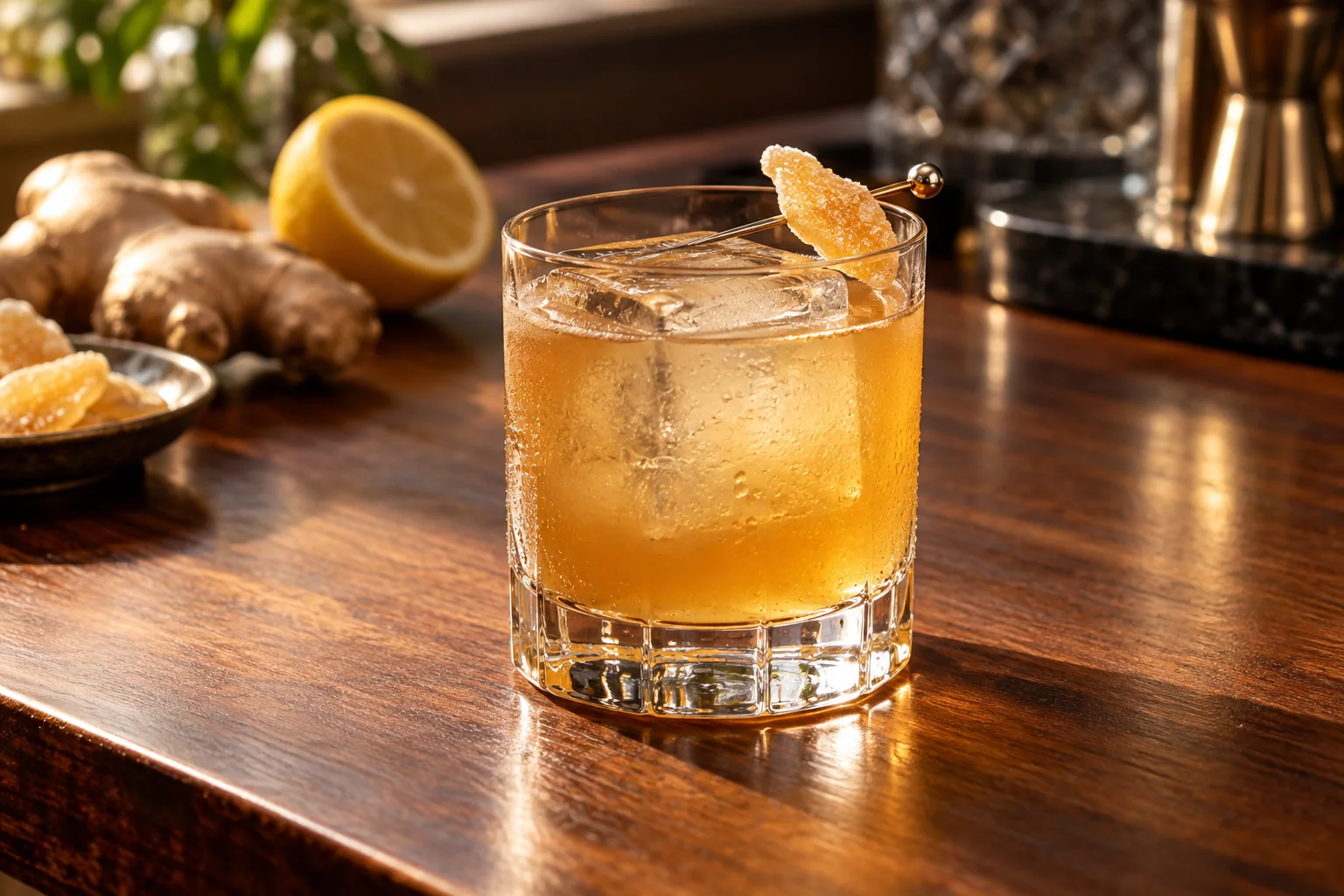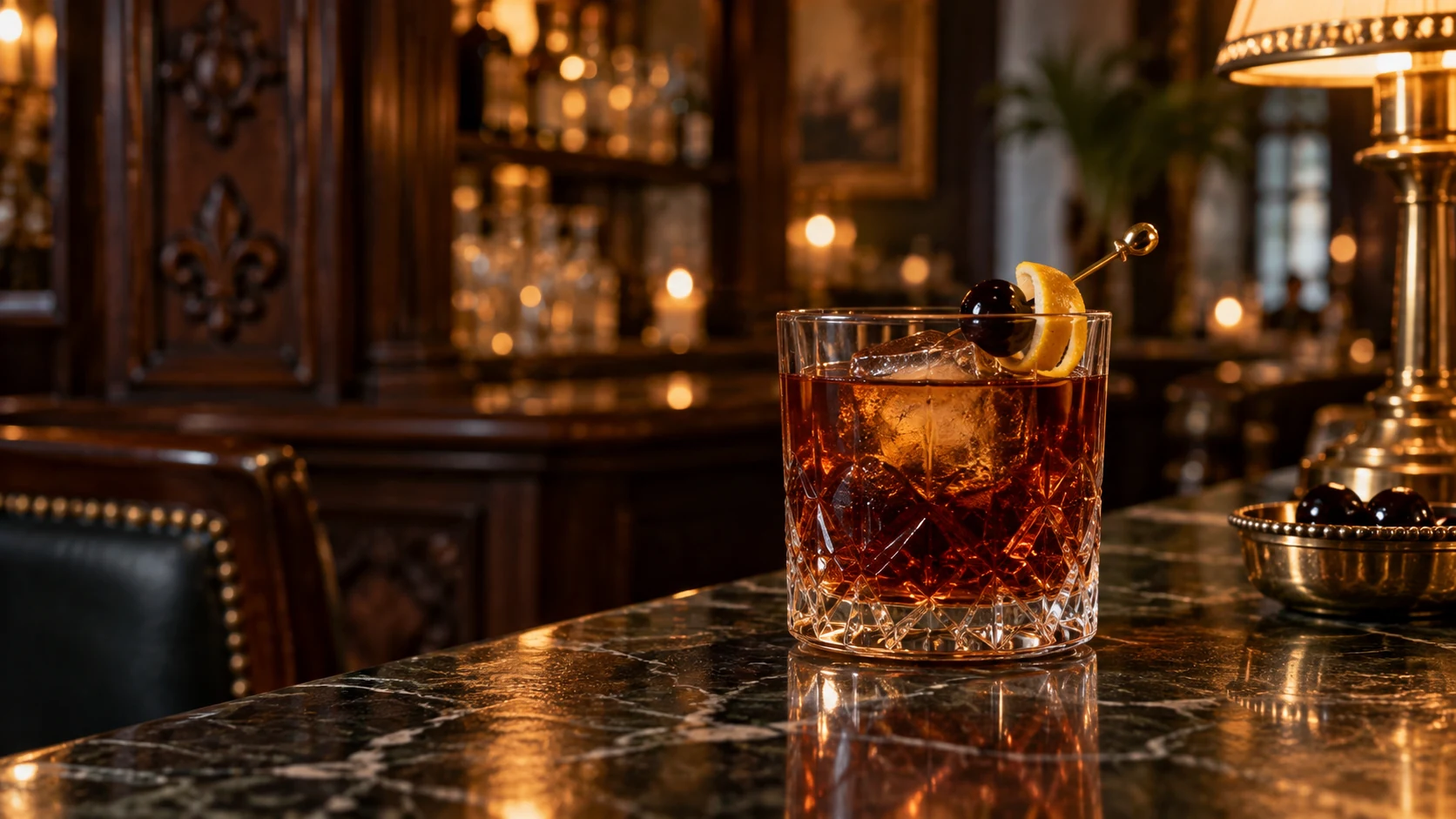
A Rusty Nail cocktail is Scotch whisky mixed with Drambuie, stirred over ice, and finished with lemon peel. It is a compact, spirit-forward drink: whisky supplies the structure, while the liqueur adds honeyed sweetness and herbal spice.
For a cozy evening at a private home bar, it is particularly convenient. You need two bottles, a measure, a spoon, and a rocks glass. The useful question is how much Drambuie to add: a little change can move the drink from whisky-led to distinctly sweet.
Rusty Nail cocktail recipe
This recipe uses the 2:1 Scotch-to-Drambuie ratio published by Drambuie, scaled to straightforward ounce measures. The larger serving retains the same proportions; the stirring time is practical home-bar guidance.
Makes: 1 cocktail. Prep and total time: 3 minutes. Equipment: measure, bar spoon, rocks glass, peeler.
Ingredients
- 2 oz (60 ml) Scotch whisky
- 1 oz (30 ml) Drambuie
- 1 large ice cube or several solid cubes
- 1 strip of fresh lemon peel
Ounces and milliliters use rounded bar conversions. Choose one set of units and use it consistently.
Instructions
- Place the ice in a rocks glass.
- Pour in the Scotch and Drambuie.
- Stir gently for about 20–30 seconds, tasting for chill and dilution.
- Squeeze the lemon peel over the glass to release its oils, add it to the drink, and serve.
What is the classic Rusty Nail ratio?
There is more than one published reference. The IBA Rusty Nail uses 45 ml Scotch and 25 ml Drambuie, served over ice with lemon zest. Drambuie's own recipe uses 40 ml Scotch and 20 ml Drambuie. Both make a whisky-led drink; the IBA version has slightly more liqueur relative to the Scotch.
The recipe above scales the producer's 2:1 formula to 60 ml and 30 ml. For a smaller drink with the same balance, use the producer's 40 ml and 20 ml measures.
If you find 2:1 too sweet, a useful home adaptation is 60 ml Scotch with 20 ml Drambuie, or 3:1. This reduces the liqueur without increasing the whisky pour. Try the reference version first, then change one measurement at a time.
Choosing Scotch for a Rusty Nail
Start with a Scotch you already enjoy and are happy to mix. A blended Scotch with rounded cereal, fruit, and oak notes is an approachable starting point. You do not need an expensive bottle to learn whether you like the combination.
A heavily peated whisky changes the character substantially. Smoke can sit well beside the liqueur's sweetness, but it may dominate the quieter herbal notes. If you are curious, try replacing just 15 ml of the 60 ml Scotch pour with a peated whisky before committing the whole drink to that style.
Single malt is also an option. Choose it for its flavor rather than assuming the category automatically produces a better cocktail. Record the bottle and ratio you use: with only two liquid ingredients, both choices remain easy to taste.
For a Scotch drink with citrus, ginger, and a different approach to smoke, see our Penicillin cocktail recipe.
What does Drambuie contribute?
Drambuie gives the Rusty Nail its sweet, honeyed, herbal side. It is part of the drink's flavor structure, not merely a way to sweeten Scotch. That is why honey syrup alone does not reproduce the same cocktail.
If you only have another whisky liqueur, you can make a related drink, but treat it as a variation. Start with a small measured pour and taste before adding more. Different liqueurs can bring quite different sweetness and spice.
There is no need to add sugar syrup to the main recipe. Likewise, lemon peel is used for aroma; squeezing lemon juice into the glass turns the drink toward a different style.
Rusty Nail versus Old Fashioned
Both are stirred, spirit-forward drinks commonly served over ice. An Old Fashioned builds its balance around whiskey, sugar, and bitters. The Rusty Nail gets its sweetening and additional flavor from Drambuie instead.
If you enjoy the slow change in an Old Fashioned as its ice melts, the Rusty Nail offers a similar serving ritual. Expect a more obvious liqueur presence. For a wine-based modifier instead, the Manhattan takes whiskey in another direction.
Ice, dilution, and the lemon twist
Solid, fresh ice makes the drink easier to control. A large cube is convenient for a slow sip, but it still needs stirring at the start. Simply pouring both ingredients over it can leave the first mouthful warmer and more concentrated than you intended.
Use 20–30 seconds as a starting point, then taste. Ice size and temperature affect dilution, so the clock is a guide rather than a guarantee. The finished drink should feel cold and integrated while retaining its whisky character.
Peel a thin strip of lemon with as little white pith as practical. Hold it over the surface and squeeze it gently, skin facing the drink. A fresh strip adds more aroma than a dry twist prepared hours earlier.
Troubleshooting your drink
- Too sweet: try 60 ml Scotch and 20 ml Drambuie next time. Keep the Scotch bottle and ice consistent so the comparison is useful.
- Too hot or concentrated: stir a little longer and taste again before changing the ratio.
- Too smoky: use a less peated Scotch, or reduce the smoky portion in your blend.
- Too thin: serve promptly over solid ice and avoid beginning with half-melted cubes.
For two servings, measure 120 ml Scotch and 60 ml Drambuie, then divide equally between two ice-filled glasses and stir each one. Garnish separately. This is easy to prepare while keeping control of each drink's temperature.
Frequently asked questions
Is a Rusty Nail shaken or stirred?
Stir it. The main recipe contains neither juice nor cream, and it does not need the aeration of shaking. For a creamy shaken option, try the Grasshopper.
Can you use bourbon instead of Scotch?
You can make that variation, but it changes the classic Scotch-and-Drambuie combination. Bourbon brings a different grain and oak profile; start with a smaller liqueur measure if the result tastes too sweet.
Does a Rusty Nail need bitters?
Neither reference recipe linked above includes them. A dash can be an experiment, but make the two-ingredient version first so you know what the bitters change.
Can you make it ahead?
For a short head start before serving, measure the Scotch and Drambuie together in a clean, covered container. Divide into glasses and stir with ice when ready. Pre-mixing the bottles does not replace the water and chilling provided by that final stir.