Introduction
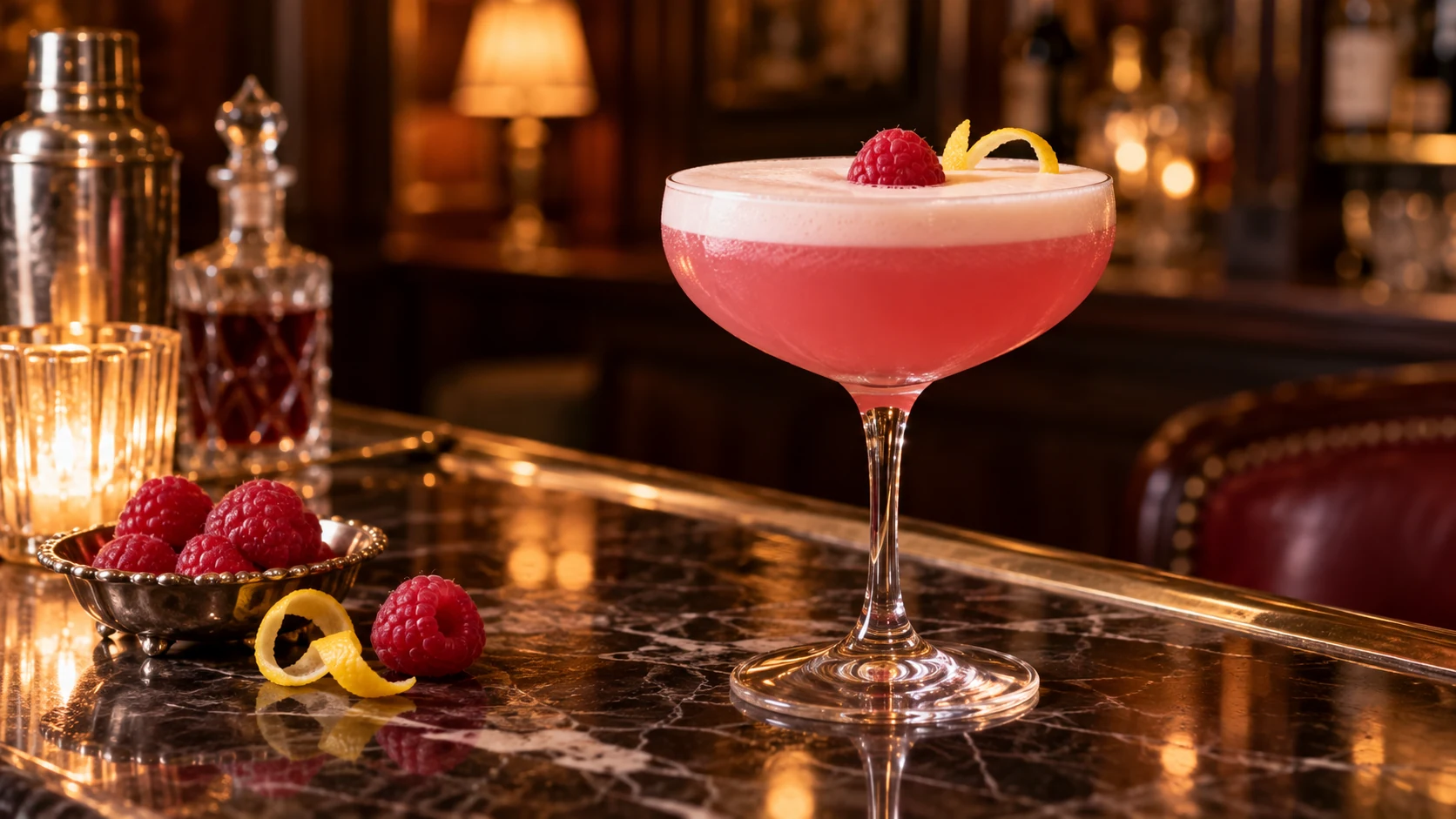
The Clover Club is the cocktail people underestimate until the glass hits the table. It is pink, yes. It is pretty, absolutely. But beneath the raspberry color is a serious gin sour: sharp lemon, dry botanicals, real berry flavor, and a silky foam that makes the first sip feel almost tailored.
This is not a sugary raspberry drink hiding behind a vintage name. A proper Clover Club cocktail is bright, dry, and elegant, with just enough fruit to soften the gin without turning the drink into dessert. It is the kind of recipe that wins over guests who think they do not like gin and surprises gin lovers who expect something lighter.
This guide gives you the classic Clover Club cocktail recipe, shows how to make raspberry syrup that tastes like actual fruit, and explains the dry shake technique that creates the signature foam.
What Is a Clover Club Cocktail?
The Clover Club is a pre-Prohibition gin cocktail built with gin, raspberry syrup, fresh lemon juice, and egg white. Some versions include dry vermouth, which adds wine-like dryness and length. The drink is shaken hard and served up, usually in a coupe.
Its name comes from the Clover Club, a Philadelphia social club associated with writers, lawyers, and businessmen in the late 19th and early 20th centuries. The cocktail became a symbol of polished hotel-bar drinking before it fell out of fashion. The modern revival brought it back for a good reason: when made correctly, it is one of the most graceful gin sours ever created.
The trick is restraint. The raspberry should glow, not shout. The foam should feel creamy, not heavy. The gin should remain visible through the fruit.
Clover Club Cocktail Recipe
This version includes dry vermouth for a classic, elegant profile. If you prefer a fruitier drink, use the no-vermouth variation below.
Ingredients:
- 1 1/2 oz gin
- 1/2 oz dry vermouth
- 1/2 oz fresh lemon juice
- 1/2 oz raspberry syrup
- 1 egg white
- Garnish: 3 fresh raspberries or a lemon twist
Instructions:
- Add the gin, dry vermouth, lemon juice, raspberry syrup, and egg white to a shaker without ice.
- Dry shake hard for 10 seconds to build foam.
- Add ice and shake again for 10 to 12 seconds, until well chilled.
- Double strain into a chilled coupe glass.
- Garnish with fresh raspberries or a light lemon twist.
Raspberry Syrup That Tastes Real
The best Clover Club starts with raspberry syrup that tastes like berries, not candy. You can buy a quality syrup, but homemade is simple and much better.
Raspberry syrup:
- 1 cup fresh or frozen raspberries
- 1 cup white sugar
- 1/2 cup water
Instructions:
- Add raspberries, sugar, and water to a small saucepan.
- Warm gently and stir until the sugar dissolves and the berries soften.
- Do not boil aggressively; high heat can make the syrup taste jammy.
- Let it steep for 10 minutes.
- Strain through a fine mesh strainer without forcing too much pulp through.
- Chill before using.
The syrup should be vivid, tart-sweet, and clean. If it tastes flat, add a tiny pinch of salt. If it tastes too sweet, the lemon in the cocktail will help, but you can also reduce the syrup measure slightly.
Egg White Foam
Egg white gives the Clover Club its plush texture and pale pink cap. It does not make the drink taste eggy when used properly. It simply traps air, softens the citrus, and gives the cocktail a beautiful finish.
The dry shake matters. Shaking first without ice helps the egg white foam before dilution and chilling. The second shake with ice tightens the drink and brings it to serving temperature. Double straining removes ice chips and any raspberry seeds, leaving a smoother texture.
If you avoid raw egg white, use aquafaba, the liquid from canned chickpeas. Start with 3/4 oz aquafaba in place of one egg white. It foams well and keeps the drink vegan, though the texture is slightly different.
Choosing the Gin
A classic dry gin is the best starting point. Juniper gives the cocktail structure, citrus botanicals echo the lemon, and a dry finish keeps the raspberry from taking over.
Very floral gin can work, but it may make the drink taste perfumed. Old Tom gin makes a softer, rounder Clover Club with more sweetness. Navy strength gin gives the drink a sharper backbone, but you may want to increase the raspberry syrup by a barspoon to keep the balance friendly.
For most home bartenders, a dependable London dry gin is the right call. The drink should taste like raspberry wrapped around gin, not raspberry hiding the gin.
With or Without Dry Vermouth
The dry vermouth question depends on what kind of Clover Club you want. With dry vermouth, the cocktail is longer, drier, and more elegant. Without it, the drink is more direct: gin, raspberry, lemon, foam.
No-vermouth version:
- 2 oz gin
- 3/4 oz lemon juice
- 3/4 oz raspberry syrup
- 1 egg white
That version is easier to love immediately, especially for guests who enjoy fruit-forward sours. The vermouth version is more refined and better for people who like martinis, French 75s, and drier aperitif-style drinks.
Both are legitimate. The important thing is not to drown the drink in syrup.
Taste Notes
A great Clover Club opens with raspberry aroma and a cool, foamy texture. The lemon should arrive quickly, followed by gin botanicals and a dry finish. The color should be soft pink, not neon red. The flavor should be fresh berry, not raspberry candy.
Compared with a Gin Sour, the Clover Club is silkier and more fragrant. Compared with a Bramble, it is cleaner and less crushed-ice casual. Compared with a French Martini, it is drier, brighter, and much more balanced.
It is an elegant cocktail, but not a fragile one. Serve it cold, shake it hard, and it will hold the room.
Common Mistakes
The most common mistake is using too much raspberry syrup. More color does not mean more flavor. Too much syrup makes the drink heavy and hides the gin.
The second mistake is skipping the dry shake. You can still make a tasty drink, but the texture will be thinner and less polished. The third mistake is using bottled lemon juice. Fresh lemon is essential because the cocktail depends on clean acidity.
Finally, do not let the drink sit around. Foam looks best and tastes best immediately after shaking. The Clover Club is a serve-now cocktail.
Easy Variations
For a brighter Clover Club, add a barspoon of fresh grapefruit juice. It lifts the raspberry and makes the finish more aromatic.
For a richer version, use Old Tom gin and skip the vermouth. This creates a rounder, more dessert-leaning drink without becoming cloying.
For a champagne-topped variation, strain the cocktail into a larger coupe and add 1 oz chilled sparkling wine. The foam will rise beautifully, and the drink becomes lighter and more celebratory.
Serving Tips
Chill the glass before you start shaking. Use a fine strainer if your raspberry syrup has seeds or pulp. Garnish simply with three raspberries on a pick, a single raspberry floated on the foam, or a thin lemon twist.
If you are making Clover Clubs for guests, prepare the raspberry syrup ahead of time and keep it cold. Measure each drink individually rather than batching with egg white. Egg white and citrus are best handled fresh.
Conclusion
The Clover Club cocktail is proof that pretty can still be precise. Gin, raspberry, lemon, and foam create a drink that is vivid without being loud and elegant without being stiff. Make a real raspberry syrup, use fresh lemon, respect the dry shake, and keep the sweetness in check. The result is a pink classic with real backbone and the kind of first sip that makes people stop mid-sentence.