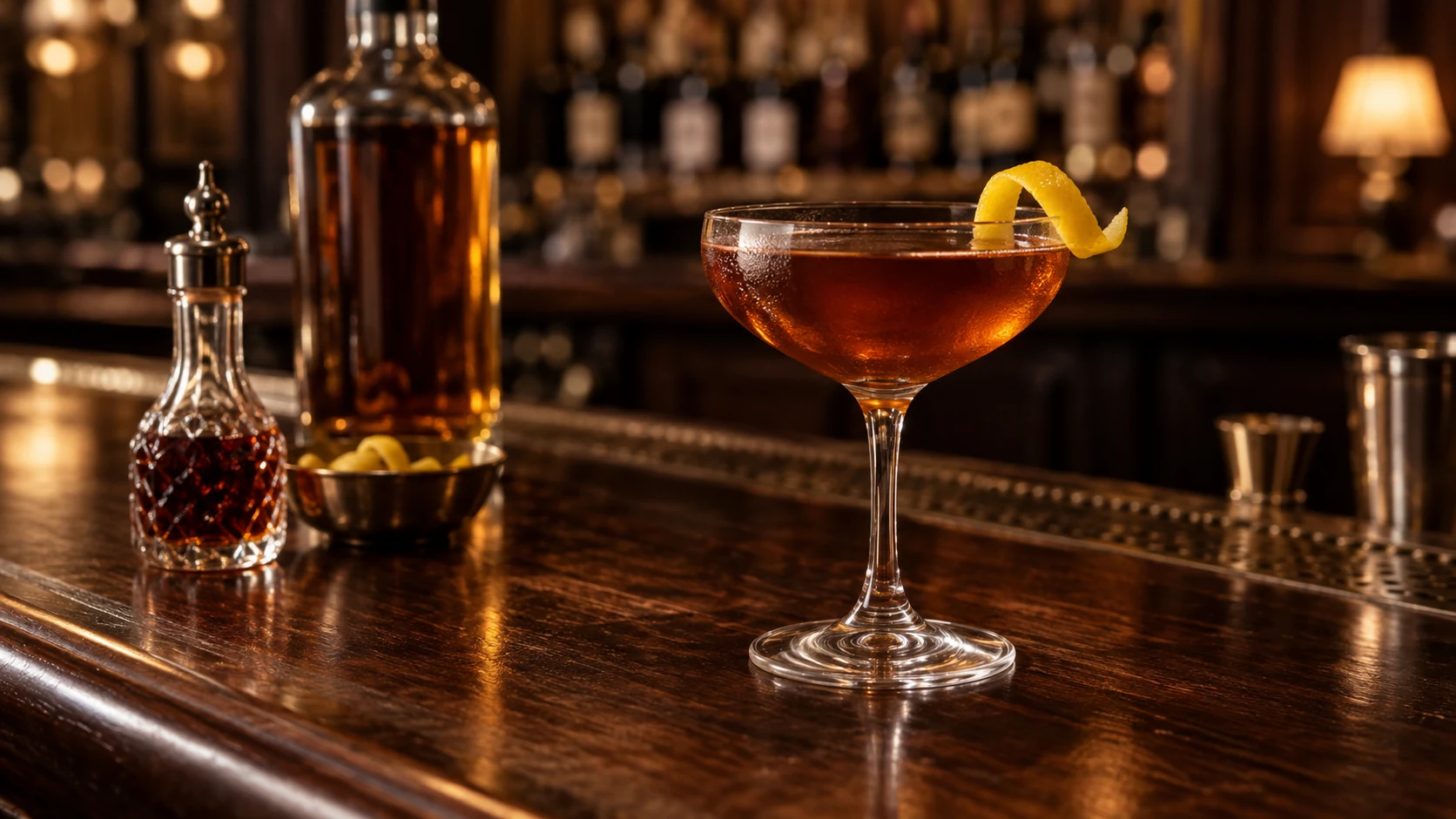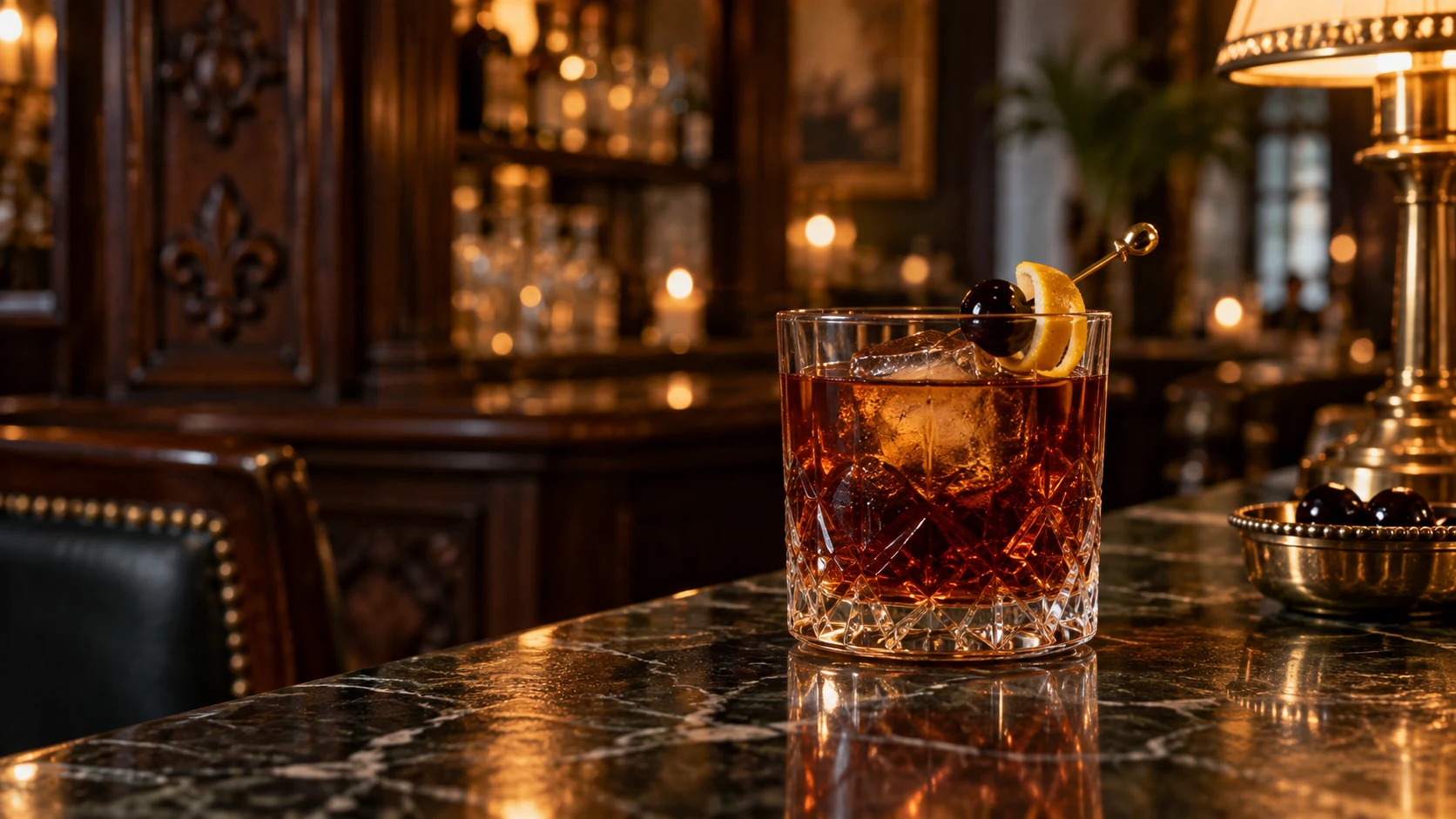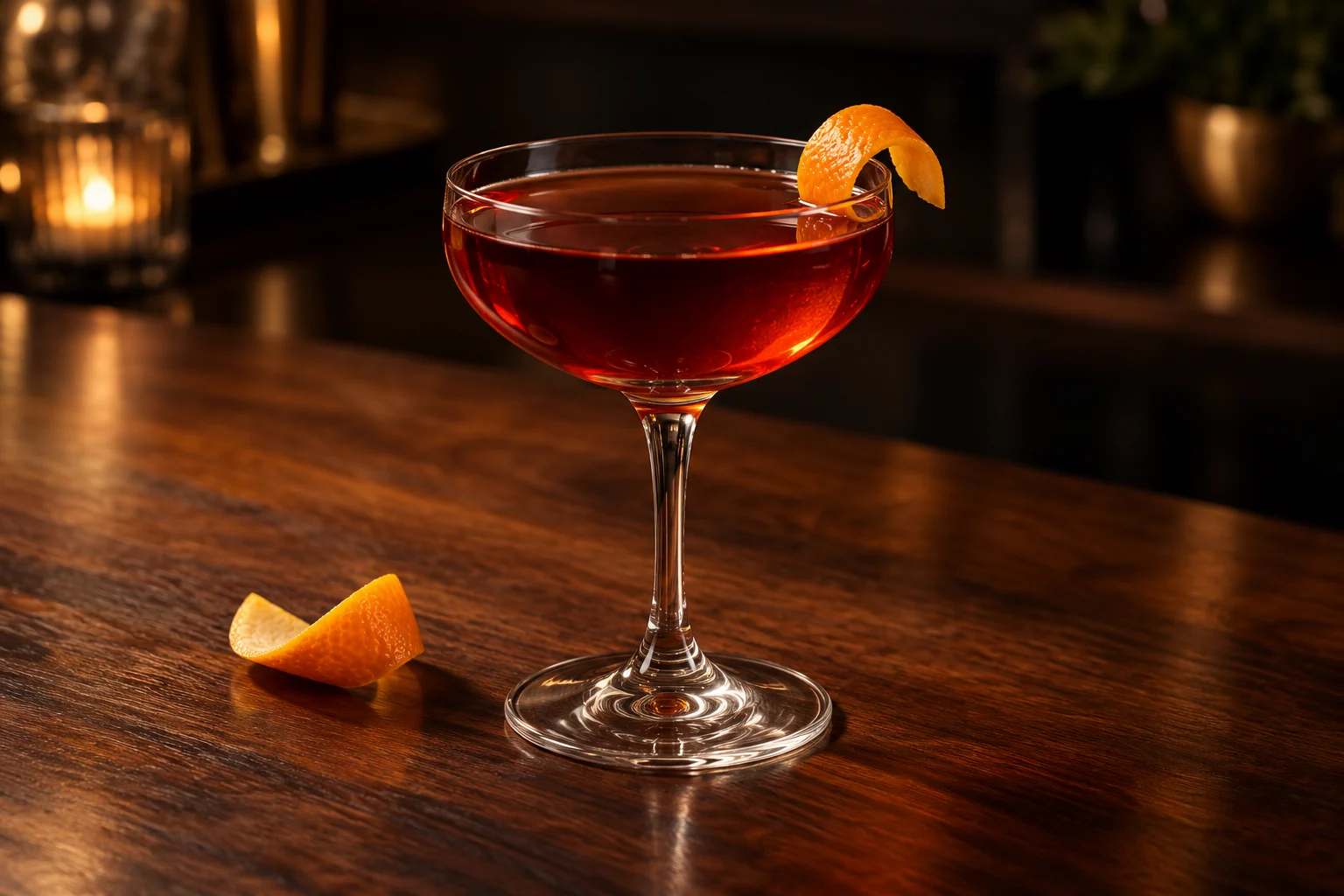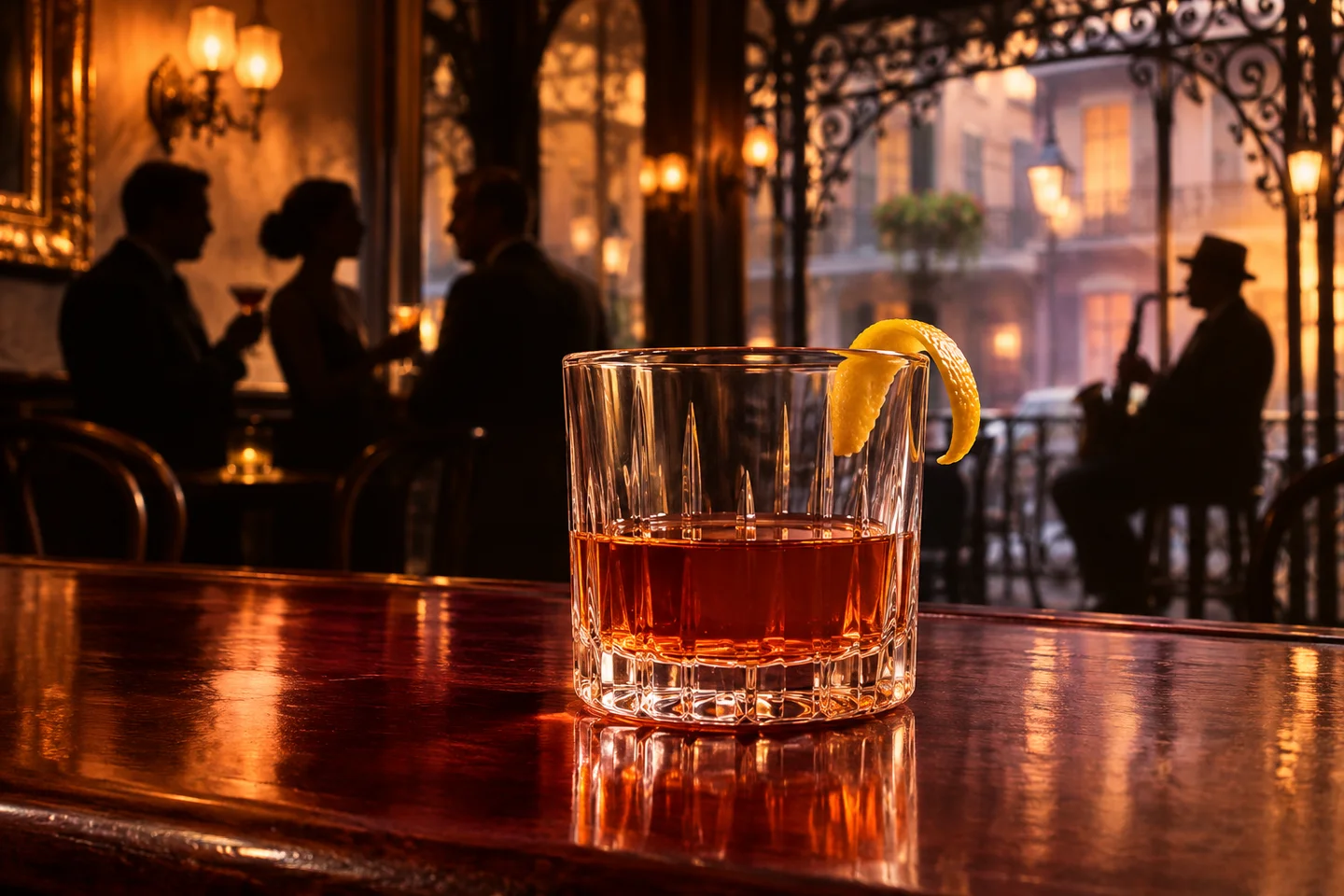
A Sazerac is a short, stirred cocktail of rye whiskey, sugar and Peychaud's bitters served in an absinthe-rinsed glass. Our recipe uses 2 oz (60 ml) rye, one sugar cube and two dashes of bitters, with lemon oils over the surface. Serve it cold without ice in the finished glass.
For stop four in 50 States, 50 Cocktails, Louisiana brings us to New Orleans. After Pennsylvania's Clover Club, the Sazerac trades raspberry foam for rye spice, anise aroma and a carefully chilled rocks glass.
Jump to the recipe · Why Louisiana? · The absinthe rinse
Rye Sazerac recipe
This house version retains this page's existing two-ounce rye and two-dash bitters proportions. We have replaced the vague “splash” of absinthe with a measured rinse. For comparison, Sazerac House's published recipe uses 1 1/2 oz rye, three dashes of Peychaud's and a Herbsaint rinse. The recipe below is not an exact transcription of that specification.
Makes: 1 cocktail. Prep time: 5 minutes. Total time: 5 minutes. Glass: small rocks or old-fashioned glass. Equipment: jigger, mixing glass, bar spoon, muddler and strainer.
Ingredients
- 2 oz rye whiskey (60 ml)
- 1 sugar cube
- 2 dashes Peychaud's bitters
- 1/4 oz absinthe (7.5 ml; for rinsing the glass, excess discarded)
- Ice (for chilling and stirring)
- 1 lemon peel (for garnish)
The ml measurements are practical rounded equivalents of US fluid ounces. Use one measuring system throughout.
Instructions
1. Chill the serving glass
Fill a small rocks glass with ice and set it aside while preparing the drink.
2. Dissolve the sugar
Place the sugar cube and Peychaud’s bitters in a mixing glass. Crush the cube with a muddler or bar spoon, add the rye whiskey and stir until the sugar dissolves.
3. Stir with ice
Fill the mixing glass with ice and stir for about 20–30 seconds, until thoroughly cold.
4. Rinse the glass with absinthe
Empty the ice from the serving glass. Add the absinthe and rotate the glass to coat the inside. Pour away the excess, leaving a thin aromatic coating.
5. Strain and finish with lemon
Strain the chilled whiskey mixture into the rinsed glass without ice. Twist the lemon peel over the drink to release its oils, then rest it at the rim. Serve immediately.
Why the Sazerac represents Louisiana
New Orleans is the reason for this state's selection. Sazerac House documents the drink's 2008 designation as the official cocktail of New Orleans. That is a city designation, not a claim that it is Louisiana's official statewide cocktail.
The drink's longer history includes cognac, rye and changing choices of anise-flavored rinse. Origin accounts often compress those developments into a neat story about one inventor and one original glass. For this series, the well-established New Orleans association is enough; we do not present the claim that it was “America's first cocktail” as a settled fact.
That distinction lets the cocktail speak for itself. It has a recognizable local identity without needing an exaggerated superlative, and it makes a useful contrast with the other states' drinks: no juice, no soda and no elaborate garnish.
An absinthe rinse is a coating, not a full pour
The quarter-ounce measure is enough to move around the walls of a small glass. Once the inside is coated, discard the liquid that collects at the bottom. Most of that measured absinthe does not stay in the drink; its job is to perfume the glass.
A heavy puddle can overwhelm the rye. If your Sazerac tastes mostly of anise, check the rinse before changing the whiskey or sugar. A small serving glass also helps: you are coating a compact surface, not trying to fill a large tumbler.
Herbsaint is another established choice, used in Sazerac House's recipe. It is a different product from absinthe, so name the substitution if you use it. Keep the rinse method the same and avoid treating either bottle as a second full measure of base spirit.
Choosing rye, bitters and sugar
Rye whiskey gives this version its base. Pick a bottle whose flavor you enjoy; stronger whiskey will produce a different impression even if every measurement stays fixed. For a useful comparison, make the same recipe with one change at a time rather than increasing the syrup or bitters along with the proof.
Use Peychaud's bitters for the recipe as written. Another aromatic bitters brand is a variation, not an identical replacement. Count full, consistent dashes and keep the bottle's dispensing top in place.
The sugar should dissolve before you add ice. Crushing the cube into the bitters first breaks it up; stirring with the rye then distributes it. If you find gritty sweetness at the bottom of the finished glass, spend longer on this step. Sugar cubes vary in size, so use the same kind when comparing batches.
Why serve it without ice?
The drink is chilled and diluted during stirring, then strained into the cold, rinsed glass. Leaving the mixing ice behind fixes the serving style and avoids another large piece of ice continuing to melt in the drink.
It is meant to be a small pour. A glass that looks only partly full is expected, not a reason to top it up with whiskey or water. Prepare the lemon peel before mixing so you can finish and serve promptly.
Express the peel over the liquid rather than squeezing lemon juice into it. The oils provide citrus aroma; juice would introduce acidity and create a different drink.
Frequently asked questions
Can I use cognac instead of rye?
Cognac versions belong to the broader Sazerac tradition, but this page's main recipe is rye-based. A cognac substitution changes the flavor, and a split-base version changes the proportions. Label either as a variation instead of silently combining instructions from different recipes.
Is a Sazerac an Old Fashioned?
Both combine a spirit, sugar and bitters, but the Sazerac here adds an anise rinse and is served without ice. Compare it with our whiskey Old Fashioned to see how the glass preparation and serving method change the experience.
Do I shake it?
No. Stir the whiskey mixture with ice and strain it into the prepared glass. There is no citrus juice or egg white in this recipe that calls for the shaken texture used in the Clover Club.
Can I prepare it for guests?
Chill the glasses and prepare the lemon peels ahead, then dissolve, stir, rinse and strain close to serving. Rinse each glass individually so a batch does not accidentally receive several full measures of absinthe.
Continue the state series
Previous stop: Pennsylvania's Clover Club. Next stop: California's Oakland-rooted Mai Tai, with rum, lime and orgeat over crushed ice.