Introduction
Mezcal has moved from specialist back bars into everyday cocktail conversation because it offers a kind of flavor that few spirits can match. It can be smoky, mineral, grassy, fruity, peppery, or almost savory, depending on the agave and production style. That range makes mezcal exciting, but it also rewards restraint. A good mezcal cocktail should not taste like smoke for smoke's sake. It should taste like agave, fire, citrus, salt, and balance.
The modern mezcal drink is often lighter and brighter than people expect. Bartenders are using it in highballs, sours, spritzes, and split-base classics. The goal is not to bury the spirit, but to give its earthy depth a clear frame.
That frame matters because mezcal can be misunderstood. If a recipe treats it only as a smoke machine, the drink becomes one-dimensional. If it treats mezcal as an agricultural spirit with sweetness, acidity, minerality, and roasted depth, the cocktail becomes more layered. The best mezcal drinks taste alive, not just smoky.
Why It Is Trending
Mezcal sits at the intersection of several current drinking habits. People want cocktails with stronger identity, more texture, and less predictable sweetness. They also want spirits that carry a sense of place. Mezcal delivers both. Even a small measure can transform a familiar drink by adding roasted agave and a dry mineral finish.
Its popularity also follows the broader rise of agave cocktails beyond the Margarita. Tequila opened the door for many drinkers, and mezcal brings a more rustic, aromatic side of the same family. It gives cocktail menus a way to feel modern without relying on complicated technique.
Mezcal also answers the demand for cocktails that feel less polished in a corporate way and more connected to raw ingredients. A simple sour made with good mezcal can carry notes of cooked pineapple, wet stone, green pepper, ash, and honey. That complexity makes even familiar formats feel newly expressive.
Flavor Profile
Mezcal works best when its smoke is balanced by acidity, salt, and fruit. Grapefruit, lime, pineapple, passion fruit, cucumber, and orange all pair well with its roasted character. Chili and salt sharpen the edges. Herbal notes like cilantro, mint, or basil can make the drink feel fresher.
Because mezcal can be intense, split-base recipes are useful. Combining mezcal with tequila, vermouth, sherry, or even a small amount of rum can stretch the flavor while keeping the drink approachable.
Sweetness should be used carefully. Agave syrup is a natural partner, but too much can flatten the spirit. A small amount rounds the citrus and lets the smoke bloom. Bitters can help too, especially orange, mole, grapefruit, or celery bitters, depending on whether the drink leans bright, spicy, or savory.
Signature Recipe
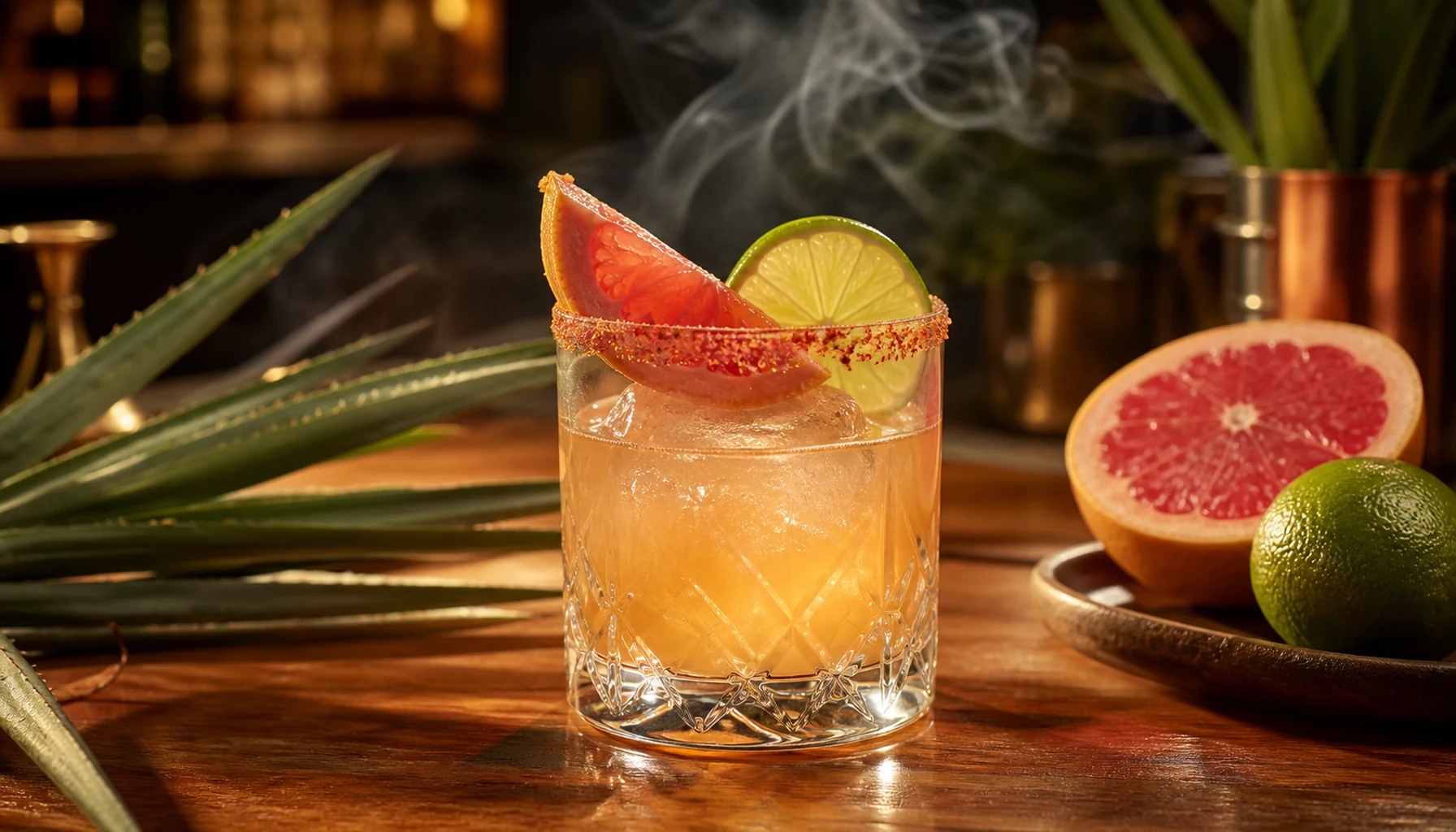
This grapefruit mezcal sour keeps the agave character upfront while using citrus and chili salt to keep the drink lively.
Ingredients:
- 2 oz mezcal
- 1 oz fresh grapefruit juice
- 3/4 oz fresh lime juice
- 1/2 oz agave syrup
- 2 dashes orange bitters
- Chili salt for the rim
- Grapefruit wedge for garnish
Instructions:
- Rim half of a rocks glass with chili salt.
- Add mezcal, grapefruit juice, lime juice, agave syrup, and orange bitters to a shaker.
- Fill the shaker with ice and shake until well chilled.
- Strain into the prepared rocks glass over fresh ice.
- Garnish with a grapefruit wedge.
Variations to Try
For a longer drink, top the recipe with chilled soda water and serve it as a highball. For a softer version, split the base with 1 oz mezcal and 1 oz blanco tequila. For a more savory profile, add a few drops of saline solution or muddle a thin slice of cucumber before shaking.
Mezcal also works beautifully in a Negroni-style drink. Use equal parts mezcal, sweet vermouth, and bitter aperitif, then stir over ice and garnish with orange peel. The result is smoky, bitter, and compact.
For a warm-weather variation, build mezcal, lime, watermelon juice, and soda in a highball. For a winter drink, stir mezcal with amontillado sherry, a little cinnamon syrup, and bitters. Both versions keep mezcal at the center while showing how flexible it can be across seasons.
Serving Tips
Keep mezcal cocktails cold and well diluted. The spirit's aromas open quickly, so under-diluted drinks can feel sharp. Fresh citrus is especially important because bottled juice makes the smoke taste flat.
Use garnishes with purpose. Grapefruit highlights bitterness, lime sharpens acidity, and chili salt adds structure. Avoid piling on smoky garnishes unless the drink needs theater; mezcal already brings plenty of aromatic drama.
If you are introducing mezcal to someone new, start with a cocktail that includes familiar fruit and fresh acidity. Grapefruit, pineapple, and lime make the spirit feel inviting. Once the drinker recognizes the agave character, move toward leaner builds with vermouth, sherry, or bitters.
Conclusion
Mezcal cocktails are trending because they offer flavor with a point of view. They are smoky, but not only smoky. They can be bright, savory, spicy, and elegant when the recipe gives the agave room to speak. With citrus, salt, and careful balance, mezcal becomes one of the most expressive spirits in the modern cocktail glass.