Introduction
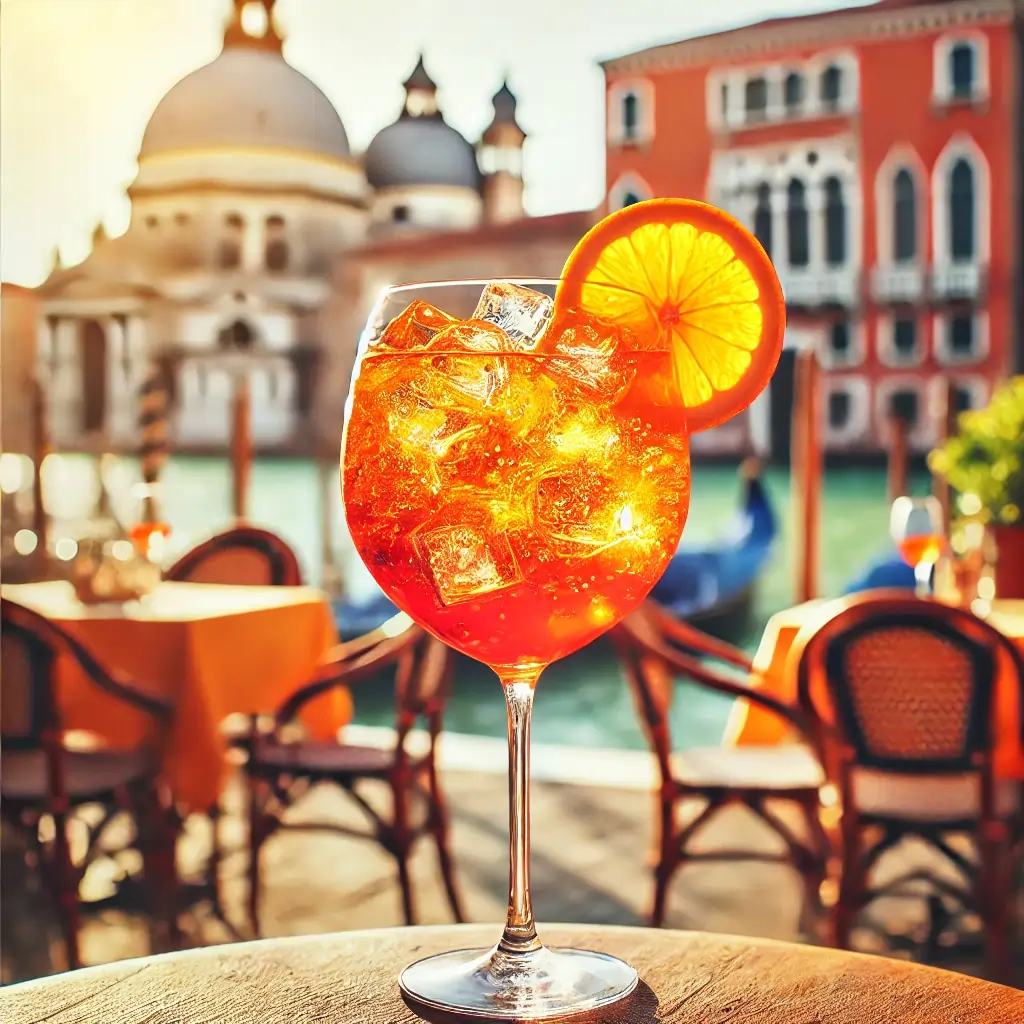
The Hugo Spritz is the Alpine cousin of the Italian aperitivo family: light, floral, minty, and built for long evenings when the sun is still on the terrace. Where the Aperol Spritz leans bittersweet and orange, the Hugo goes greener and more aromatic. Elderflower brings a soft perfume, Prosecco gives the drink its celebratory lift, and mint keeps the glass feeling cool.
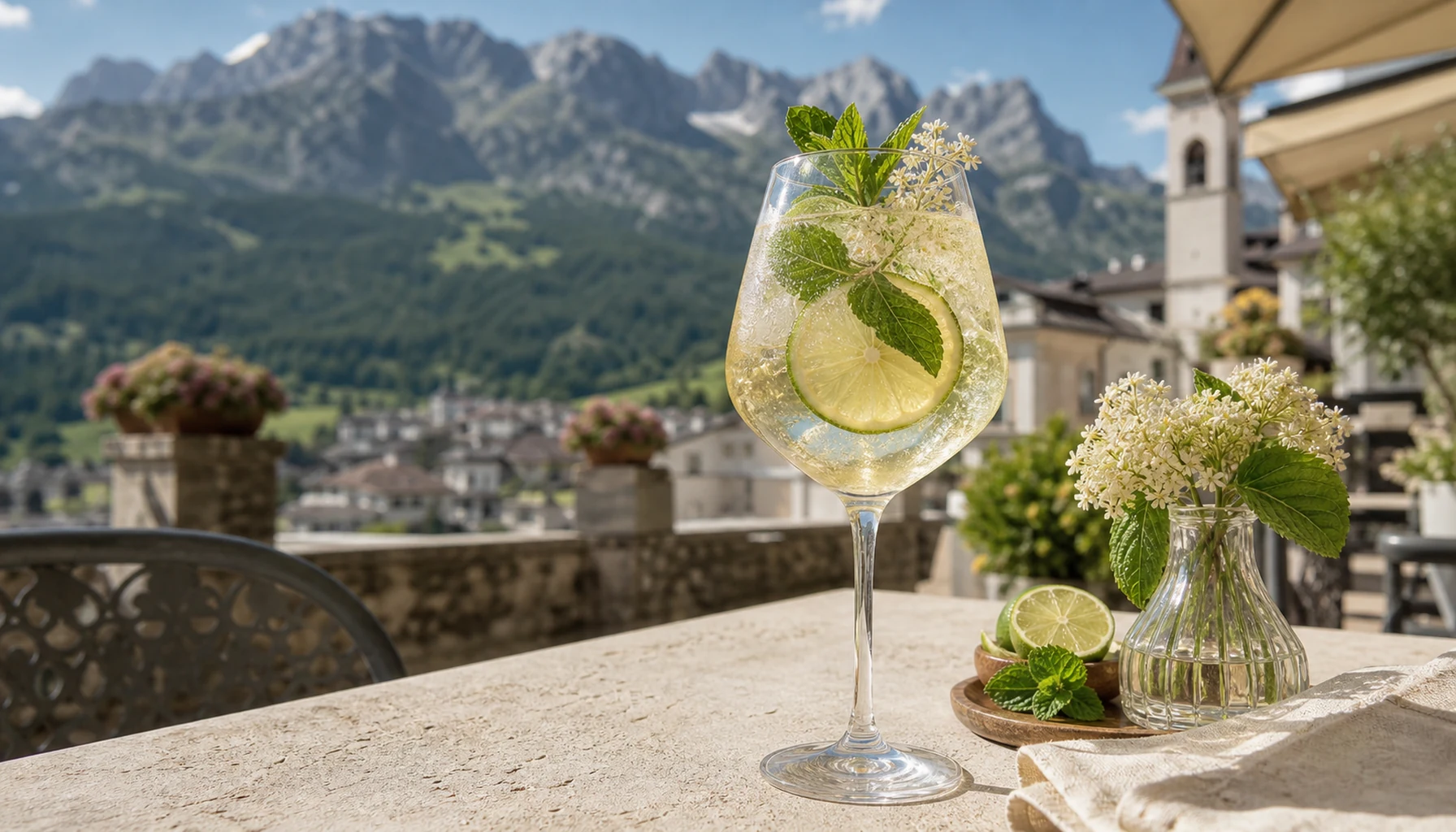
It is a very European drink in both mood and construction. The ingredients are familiar across northern Italy, Austria, Switzerland, and southern Germany: sparkling wine, herbs, cordial-like floral sweetness, citrus, and mineral water. The result tastes like an aperitif hour in the Dolomites: relaxed, fragrant, and quietly elegant.
That lightness is the point. The Hugo does not try to be a serious stirred cocktail or a tropical escape. It is closer to a ritual of place: a chilled glass, a splash of local sparkle, a mint sprig from the kitchen, and enough floral sweetness to make the drink feel welcoming.
European Character
The Hugo belongs to a style of drinking that is less about strength and more about rhythm. It fits before dinner, beside a small plate, or at a cafe table where one drink should last through conversation. Its floral profile feels modern, but the habit behind it is old: open the appetite, keep the glass cold, and let the first drink of the evening stay gentle.
The drink's northern Italian identity also makes it a useful bridge in the current Pour and Mix catalog. It sits near the Aperol Spritz, but it is not another bitter orange aperitif. It brings a greener European note, one shaped by elderflower, mint, and mountain freshness rather than Campari-style bitterness.
That contrast matters because European aperitivo culture is broader than one flavor profile. Bitter red drinks are essential, but so are pale, aromatic, wine-based drinks that open a meal gently. The Hugo gives the collection that lighter alpine lane.
Flavor Profile
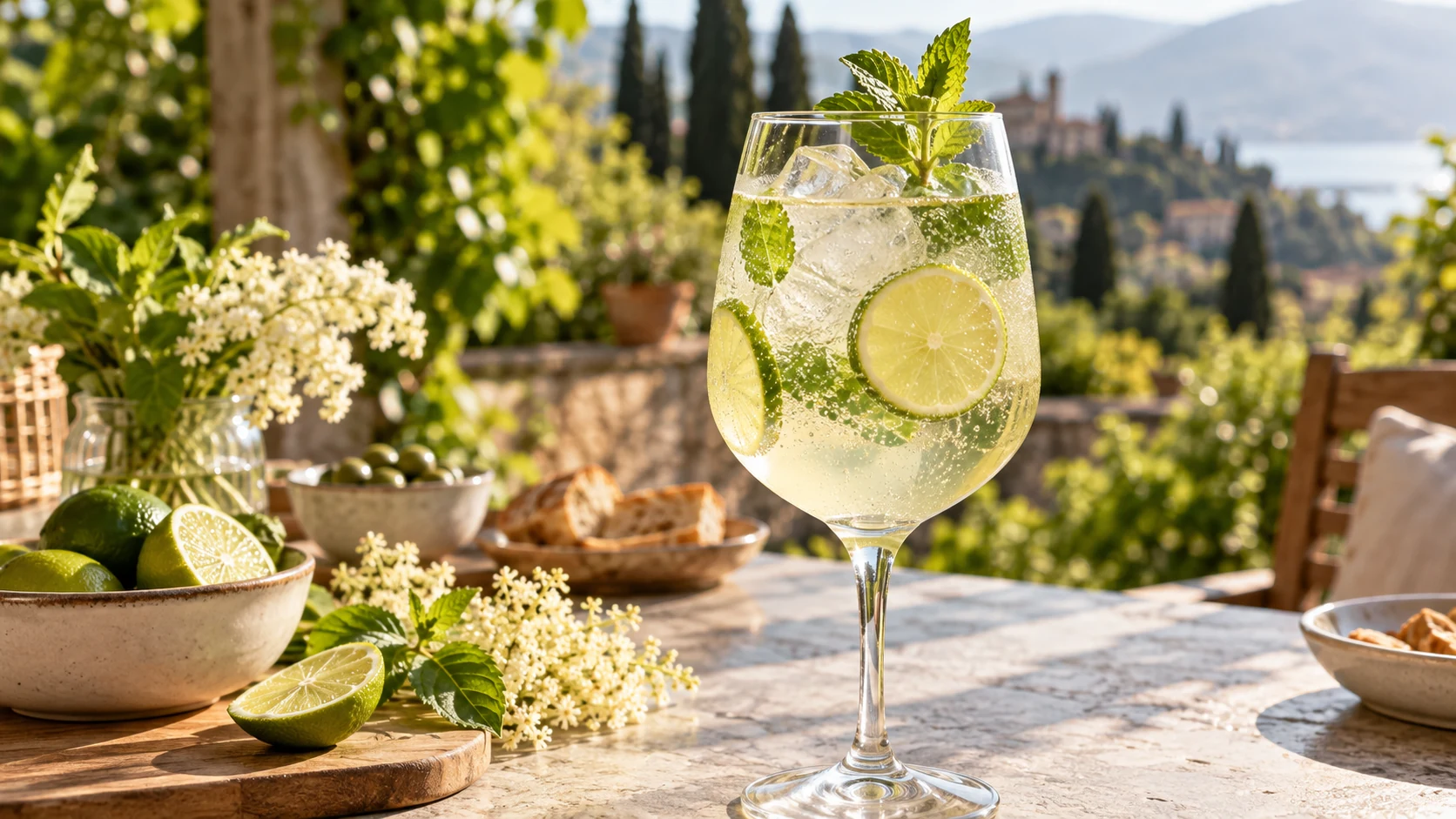
A good Hugo Spritz should smell like elderflower and fresh mint before it tastes sweet. The first sip should be sparkling and clean, with lime sharpening the floral liqueur. Prosecco adds fruit and acidity, while soda keeps the drink from becoming syrupy.
The danger is over-sweetening. Elderflower liqueur can dominate quickly, especially if the Prosecco is soft. Use enough lime to brighten the glass, and do not skip the soda. The bubbles should feel dry, not sticky.
Mint should act like aroma rather than a vegetable ingredient. If the leaves are crushed too hard, they turn the drink muddy. If they are handled gently, they lift the elderflower and make the first sip feel almost garden-like.
Signature Recipe
Ingredients:
- 1 oz elderflower liqueur
- 3 oz Prosecco
- 1 oz club soda
- 1/2 oz fresh lime juice
- 6 fresh mint leaves
- Lime wheel for garnish
Instructions:
- Add mint leaves to a large wine glass and press them gently to release aroma.
- Fill the glass with ice.
- Add elderflower liqueur and fresh lime juice.
- Pour in the Prosecco and club soda.
- Stir gently once or twice to combine without flattening the bubbles.
- Garnish with a lime wheel and a fresh mint sprig.
Variations to Try
For a drier Hugo, reduce the elderflower liqueur to 3/4 oz and add extra soda. For a softer garden version, add a thin cucumber ribbon. For a celebratory version, use a crisp Champagne-method sparkling wine instead of Prosecco, though the drink's easygoing charm works best with something fresh and not too expensive.
If elderflower liqueur feels too strong, elderflower syrup can work, but use less and increase the lime. The drink still needs acidity and bubbles to avoid tasting like lemonade.
For a more Alpine expression, add a very small splash of gentian aperitif. It gives the drink a mountain-herb bitterness without taking away the floral character. For a garden-party pitcher, multiply the liqueur and lime, keep them chilled, and add Prosecco, soda, mint, and ice only when guests arrive.
Serving Tips
Use a large glass, plenty of ice, and chilled ingredients. A Hugo warms quickly when built with room-temperature soda or wine. Slap the mint gently before it goes in the glass, but do not pulverize it. Bruised mint can turn bitter and grassy.
Serve it with olives, Alpine cheese, focaccia, smoked trout, or simple salted crisps. The drink's floral lift also pairs beautifully with asparagus, peas, and herb-heavy spring dishes.
Because it is low in strength, the Hugo is also useful as a welcome drink. It gives guests something festive right away, but it does not overwhelm the palate before the meal. Keep extra mint and lime nearby so every glass looks as fresh as it tastes.
Conclusion
The Hugo Spritz proves that European aperitivo culture is not only bitter and orange. It can also be floral, green, and breezy. With elderflower, mint, lime, and Prosecco, the drink brings a northern European freshness to the spritz family and gives the catalog a softer counterpoint to its classic Italian icons.