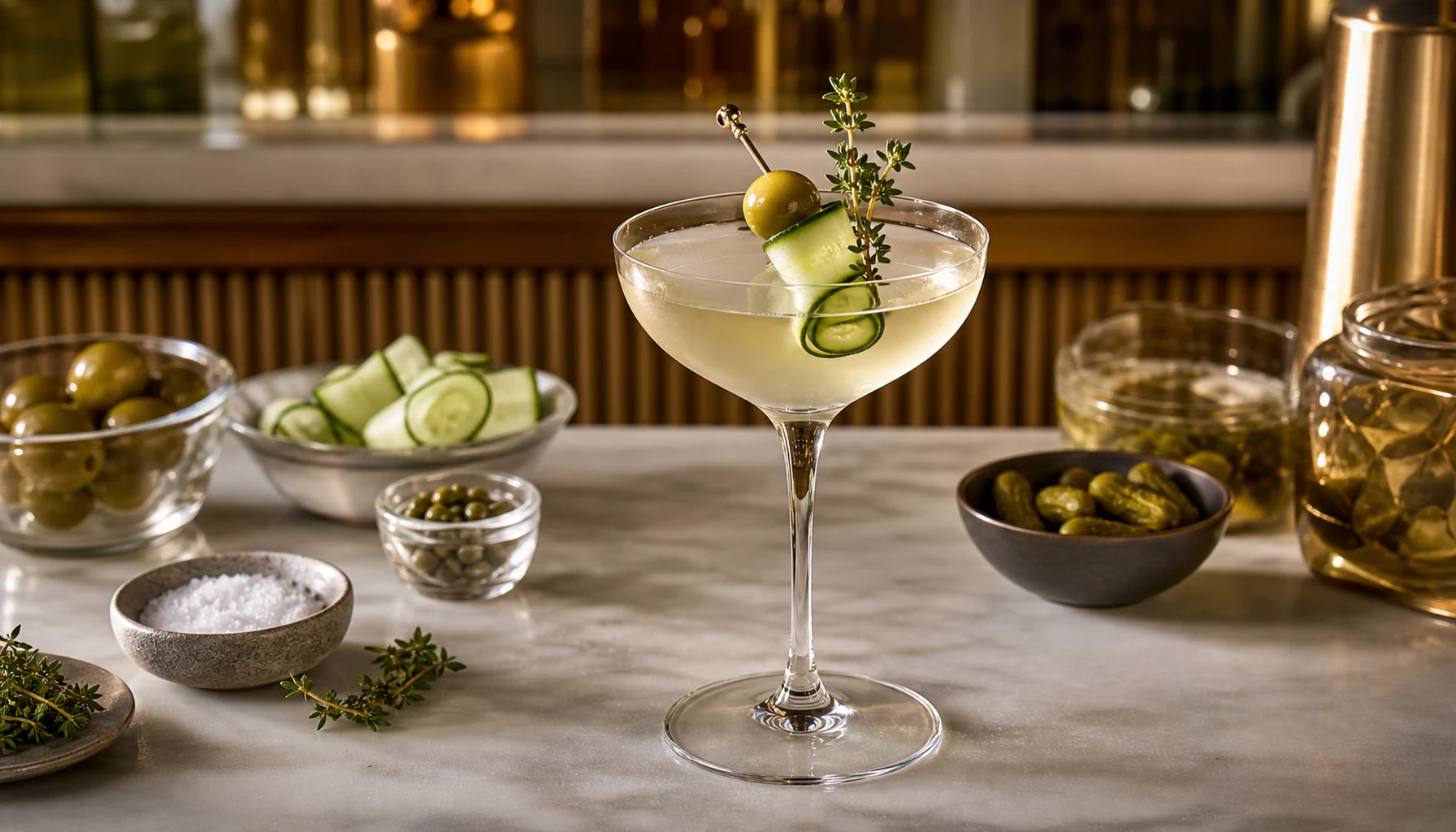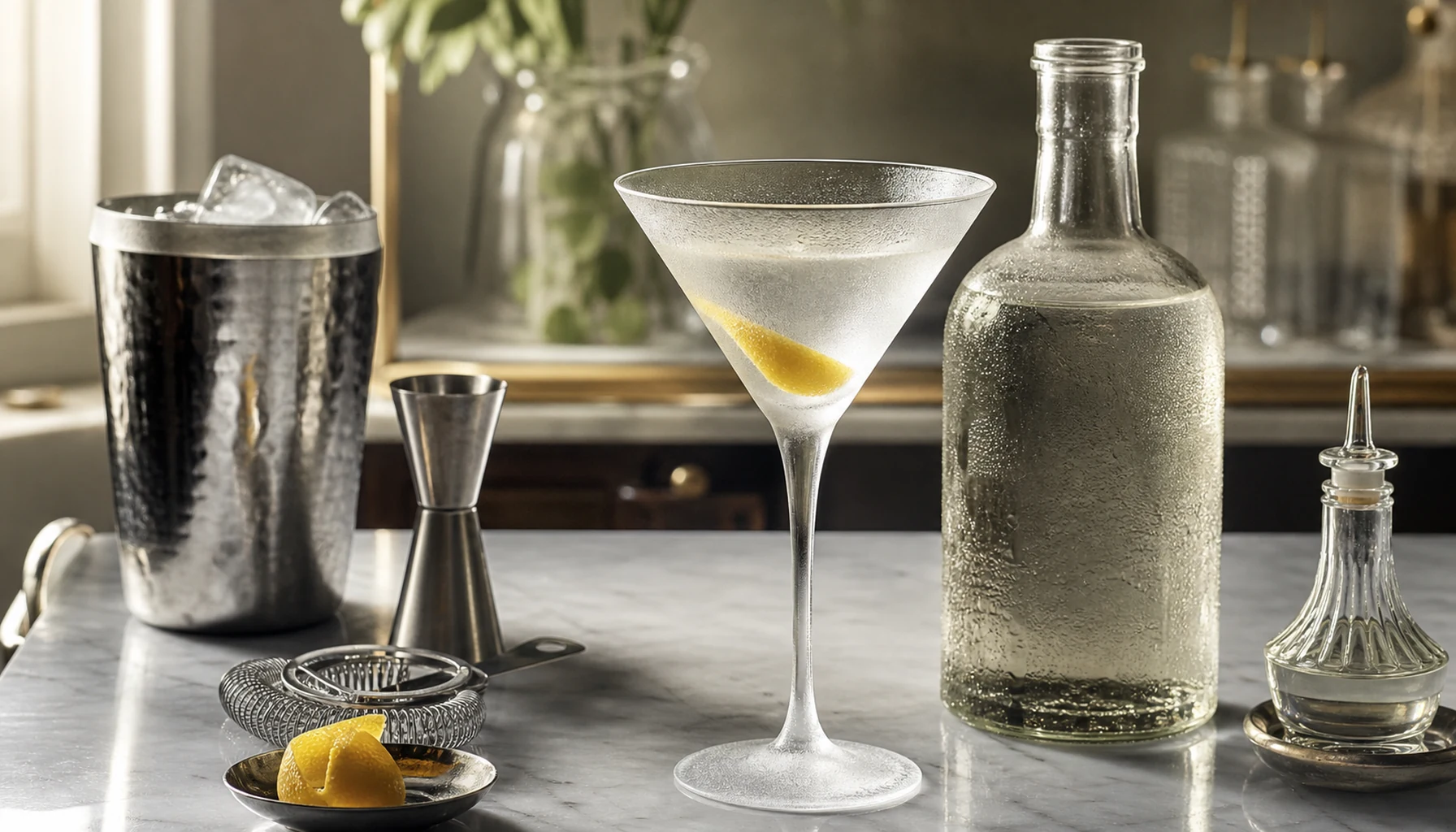
Introduction
The freezer Martini is a simple idea with a big payoff: mix the drink in advance, add the right amount of water, and keep it in the freezer until the moment you want to pour. There is no shaking, no stirring, and no last-minute measuring. The cocktail arrives icy, polished, and consistent every time.
This format fits the modern home bar because it respects both quality and convenience. A Martini is a small drink with very little room to hide mistakes. By batching it carefully, you control the ratio, dilution, and temperature before guests arrive.
It also changes the feeling of serving a Martini. Instead of leaving the table to measure, stir, strain, and clean up, you open the freezer and pour. That ease makes the drink feel less like a performance and more like hospitality. The craft is still there; it just happened earlier.
Why It Is Trending
At-home cocktails have become more intentional. People want drinks that feel bar-quality without turning the kitchen into a service station. The freezer Martini solves that problem. It lets the host do the thinking earlier and enjoy the drink later.
Batching also appeals to drinkers who care about precision. A stirred Martini depends on dilution from melting ice. In a freezer batch, water is measured directly into the bottle, so the drink can be poured cold without needing a mixing glass. The ritual shifts from performance to preparation.
The freezer format also suits the current interest in small, repeatable luxuries at home. A prepared bottle turns an ordinary evening into an occasion without requiring a full bar setup. It is especially useful for apartments, dinner parties, and late-night pours when nobody wants to make noise with a shaker.
Flavor Profile
A freezer Martini should be crisp, cold, botanical, and clean. Gin brings juniper and citrus peel. Vermouth adds softness and a wine-like herbal note. Water is not a compromise; it is what turns straight alcohol into a cocktail. Without dilution, the drink tastes hot and closed.
The freezer does mute aroma slightly, so the recipe benefits from expressive gin, fresh vermouth, and a bright garnish. Lemon twist makes the drink sharp and fragrant. Olive makes it savory and classic.
Dilution is the hidden ingredient. A common mistake is batching only gin and vermouth, then wondering why the drink feels hot. Stirred cocktails normally pick up water from ice. A freezer Martini needs that water added in advance, usually around one part water for every four to five parts alcoholic mixture.
Signature Recipe
This batch makes four small Martinis. Keep it in a sealed bottle in the freezer and pour directly into chilled glasses.
Ingredients:
- 8 oz gin
- 2 oz dry vermouth
- 2 oz filtered water
- 4 dashes orange bitters
- Lemon twist for garnish
Instructions:
- Add gin, dry vermouth, filtered water, and orange bitters to a clean bottle.
- Seal the bottle and turn it gently several times to combine.
- Place the bottle in the freezer for at least four hours.
- Chill Martini glasses before serving.
- Pour about 3 oz of the batch into each glass.
- Garnish each drink with a fresh lemon twist.
Variations to Try
For a wetter Martini, increase the vermouth to 3 oz and reduce the gin to 7 oz. For a savory version, add 1/2 oz olive brine to the batch and garnish with olives. For a softer aperitif-style Martini, use half gin and half blanc vermouth, then garnish with grapefruit peel.
Vodka can work in the same structure, but gin gives the freezer format more aroma. If you use vodka, choose a flavorful vermouth and a strong garnish so the drink does not become too neutral.
For a Gibson batch, use the same base recipe and garnish with cocktail onions. For a dirty freezer Martini, add olive brine gradually, tasting as you go, because brine concentration varies. For a citrus-forward version, add a small strip of lemon peel to the bottle for one hour, then remove it before longer storage.
Serving Tips
Use a bottle with a tight seal and enough headroom for safe chilling. Because of the alcohol content, the batch should not freeze solid in a standard home freezer, but it will become very cold and slightly viscous.
Fresh vermouth matters. Once opened, vermouth should be refrigerated and used within a reasonable window. Old vermouth makes a freezer Martini taste flat. Garnish only at serving time, because citrus oils and olives lose their freshness in a stored batch.
Label the batch with the date and ratio if you make more than one style. A freezer door full of clear bottles can become confusing quickly. For service, pour smaller portions than you might expect. The drink is very cold and spirit-forward, so a modest glass often feels more elegant than an oversized one.
Conclusion
The freezer Martini is not a shortcut so much as a smarter workflow. It moves the careful part of cocktail making ahead of time and leaves only the pleasure of pouring. Cold, clear, and ready when you are, it is one of the most practical ways to bring a polished cocktail ritual home.