Introduction
The Hurricane cocktail has a reputation for neon color, oversized glassware, and festival sweetness, but the drink can be much better than that reputation suggests. At its core, the Hurricane is a rum sour built around passion fruit. When the ratio is tight, it becomes bright, aromatic, and powerful without turning sticky. The best version tastes like rum first, tropical fruit second, and sugar last.
Searches for "cocktail Hurricane" often come from home bartenders who want the famous New Orleans drink but do not want a vague party punch. The problem is that many recipes lean too hard on bottled mixes, grenadine, and fruit juice blends. Those versions are easy to remember but difficult to balance. A professional approach uses a clear structure: strong rum, tart citrus, passion fruit syrup, a smaller supporting sweetener, and enough dilution to make the drink long rather than syrupy.
This guide keeps the Hurricane recognizable while making it more precise. It covers the New Orleans origin story, the ratio that keeps the drink lively, the rum profiles that add complexity, and the batching or clarification techniques that can turn a casual classic into a polished home bar feature.
History and Origin
The Hurricane is closely associated with Pat O'Brien's in New Orleans and the city's mid-century drinking culture. The usual origin story places the drink in the 1940s, when bars had access to plenty of rum and needed crowd-friendly ways to serve it. The curved glass that resembled a hurricane lamp helped give the cocktail its identity, and the drink eventually became one of the visual signatures of the French Quarter.
That history matters because the Hurricane was not designed as a quiet aperitif. It was a high-energy drink built for volume, spectacle, and warm weather. But spectacle does not require poor balance. New Orleans has always understood serious drinks, from the Sazerac to the Ramos Gin Fizz. A Hurricane can belong in that same city of craft if the recipe respects rum, acidity, and texture.
Modern preparation should treat the Hurricane as a structured sour rather than a dump-and-fill punch. Once you do that, the drink becomes easier to refine. The rum provides weight, citrus provides tension, passion fruit supplies perfume and acidity, and measured sweetness ties everything together.
Flavor Profile
A balanced Hurricane should be tropical, tart, and rum-rich. Passion fruit is naturally sharp and fragrant, so it does not need to be buried under orange juice or heavy grenadine. Lemon or lime gives the cocktail a clean sour edge, while a small amount of grenadine can add color and berry depth if used carefully.
Rum selection has a major effect. Jamaican rum brings ripe banana, molasses, funk, and fermentation character. It gives the drink depth and makes it feel less like fruit punch. Barbados rum tends to be rounder and more polished, with vanilla, oak, and balanced spice. A blend of Jamaican and Barbados rum is often ideal: Jamaican for lift, Barbados for structure.
Avoid using only neutral white rum unless the goal is a very light drink. The Hurricane is more compelling when the rum has age, ester, and barrel character. If the rum tastes interesting neat, it will usually make a better Hurricane.
Signature Recipe
This ratio keeps the Hurricane bright: two parts rum, one part sour citrus, one part passion fruit syrup, and a small accent of grenadine. It is full flavored but not syrupy, and it leaves room for rum character.
Ingredients:
- 1 oz aged Jamaican rum
- 1 oz aged Barbados rum
- 1 oz fresh lemon juice
- 3/4 oz passion fruit syrup
- 1/4 oz grenadine
- 2 dashes Angostura bitters
- Orange wheel and cocktail cherry for garnish
Instructions:
- Add both rums, lemon juice, passion fruit syrup, grenadine, and bitters to a shaker.
- Fill the shaker with hard ice and shake until very cold.
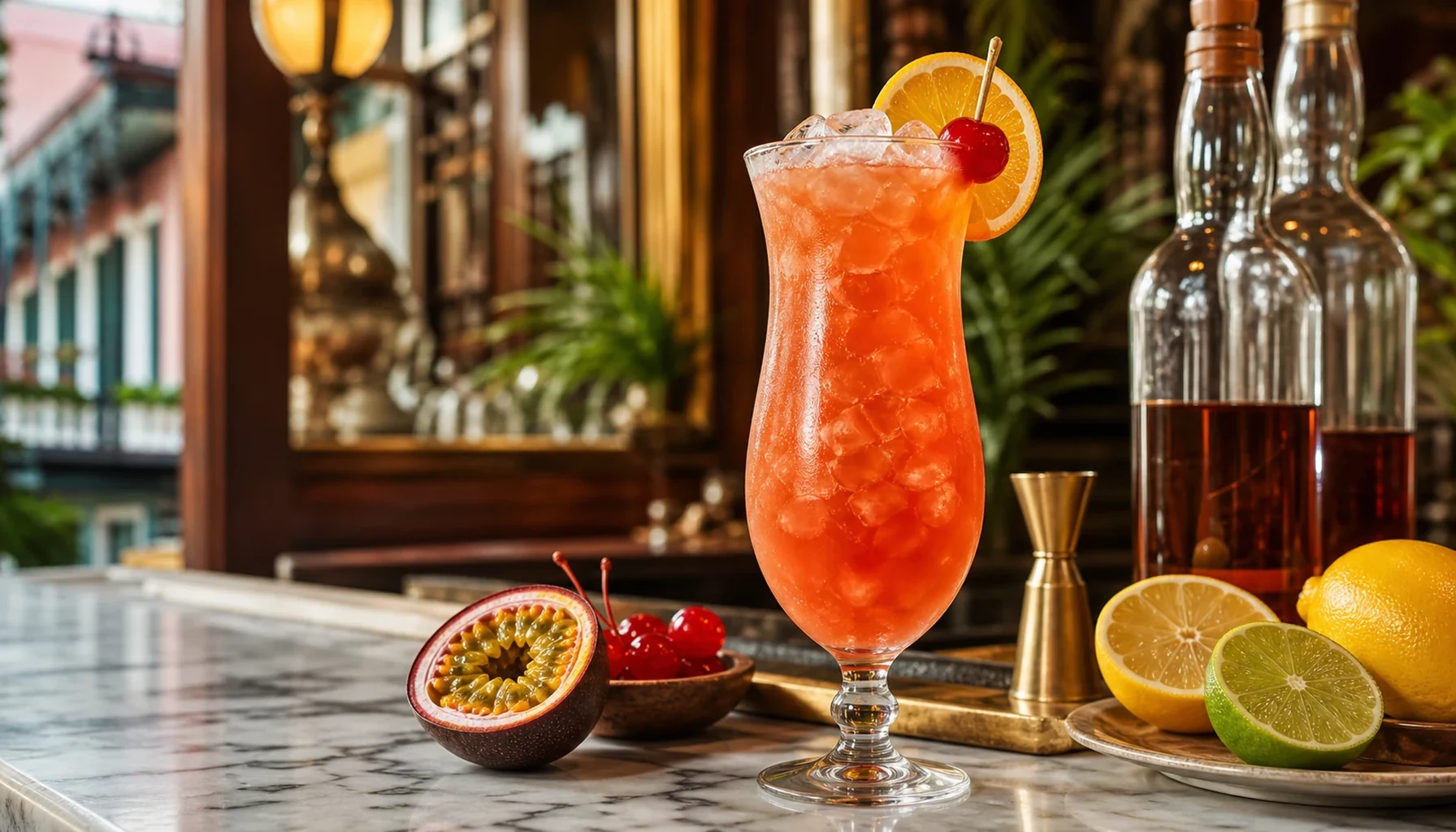
- Strain into a Hurricane glass or large tulip glass filled with fresh crushed ice.
- Top with more crushed ice if needed to crown the glass.
- Garnish with an orange wheel and cocktail cherry.
Ratio and Balance
The easiest way to ruin a Hurricane is to make every sweet ingredient large. Passion fruit syrup is already sweet and acidic. Grenadine is sweet. Many commercial passion fruit products are even sweeter than homemade versions. If both are used heavily, the drink loses its rum and becomes flat.
Use lemon when you want a clean, bright Hurricane with a classic sour profile. Use lime when you want more snap and a slightly sharper tropical edge. If your passion fruit syrup is very sweet, reduce it to 1/2 oz and keep the grenadine at 1/4 oz. If it is tart and fruit-forward, the full 3/4 oz works well.
Bitters are not mandatory, but they help. A few dashes add spice and dryness, which keeps the finish from feeling like juice. They also connect the cocktail to older New Orleans drinking traditions without changing the identity of the drink.
Batching and Clarification
The Hurricane batches well for a party if you separate the perishable and bubbly-looking parts of the process. Combine the rums, passion fruit syrup, grenadine, and bitters in a bottle. Keep lemon juice separate until the day of service, then mix the batch and chill it. Add measured water to the batch if you plan to pour directly over crushed ice without shaking. Start with about 3/4 oz water per serving, then taste and adjust.
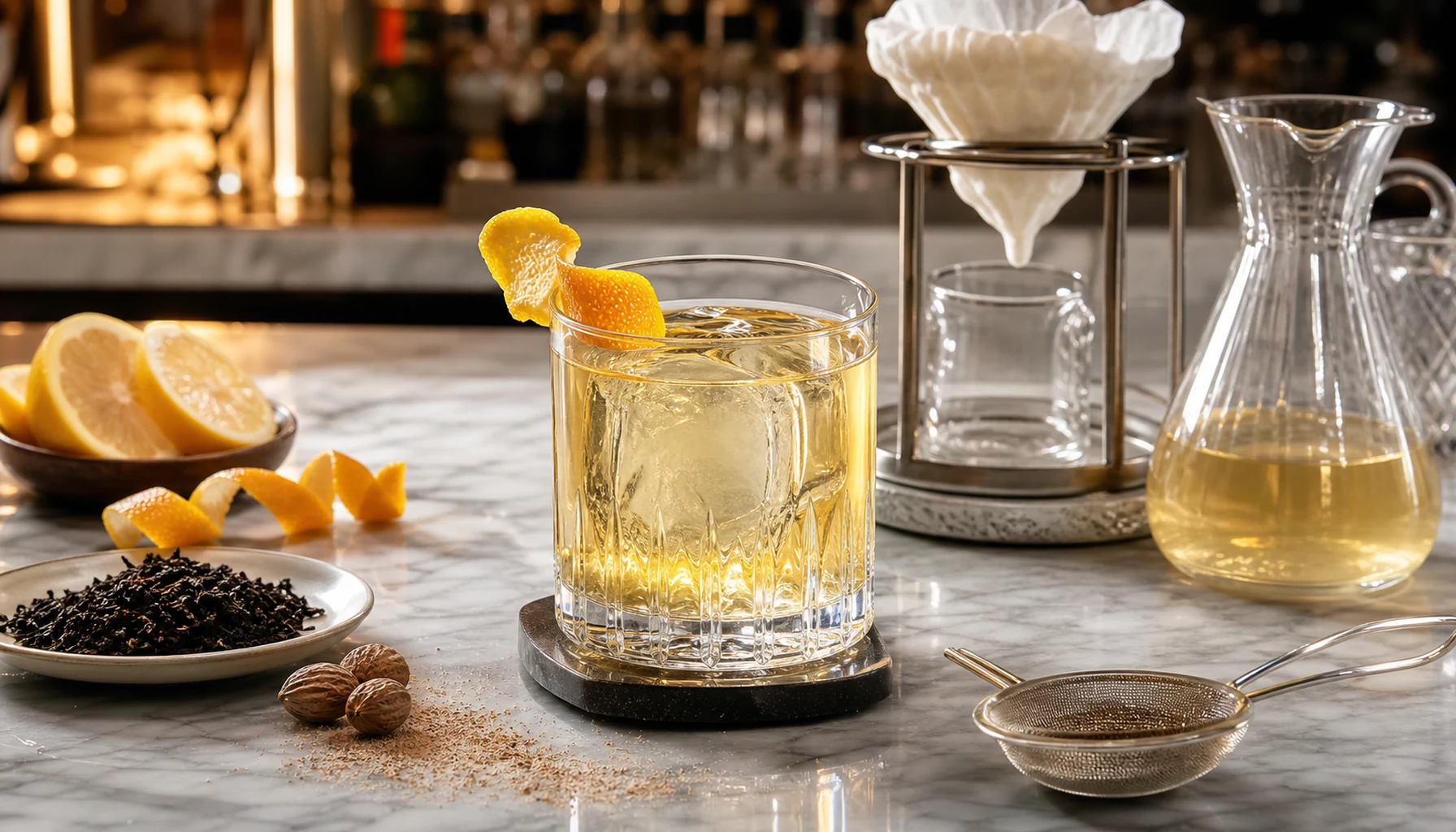
For a more advanced version, the Hurricane can be clarified as a milk punch. Combine the rums, citrus, passion fruit, grenadine, and bitters, then pour the mixture into whole milk so the citrus curdles it. Strain slowly through a coffee filter until clear. The result is softer, silkier, and surprisingly elegant, with the passion fruit aroma still present but the acidity rounded. Serve it over one large cube rather than crushed ice, because clarification changes the drink from a party cooler into a composed sipping cocktail.
Serving Tips
Crushed ice is part of the Hurricane's character. It chills fast, dilutes steadily, and makes the drink feel generous. Use fresh crushed ice rather than watery pebble ice from a melted bin. If you do not have a Hurricane glass, use a large tulip glass, Belgian beer glass, or tall Collins glass.
Do not overfill the garnish. An orange wheel and cherry are enough. Mint can be attractive, but it moves the drink toward tiki presentation and away from the cleaner New Orleans profile. Serve with a straw so the guest can drink through the coldest part of the glass and stir lightly as the ice settles.
Conclusion
The Hurricane cocktail deserves a better home bar reputation than bottled mix and excess sugar. Its history is lively, its New Orleans identity is strong, and its structure is easy to improve once you treat it like a rum sour. Use expressive rum, fresh citrus, controlled passion fruit syrup, and real ice. The result is still festive, but it is also balanced enough to stand beside the classics.